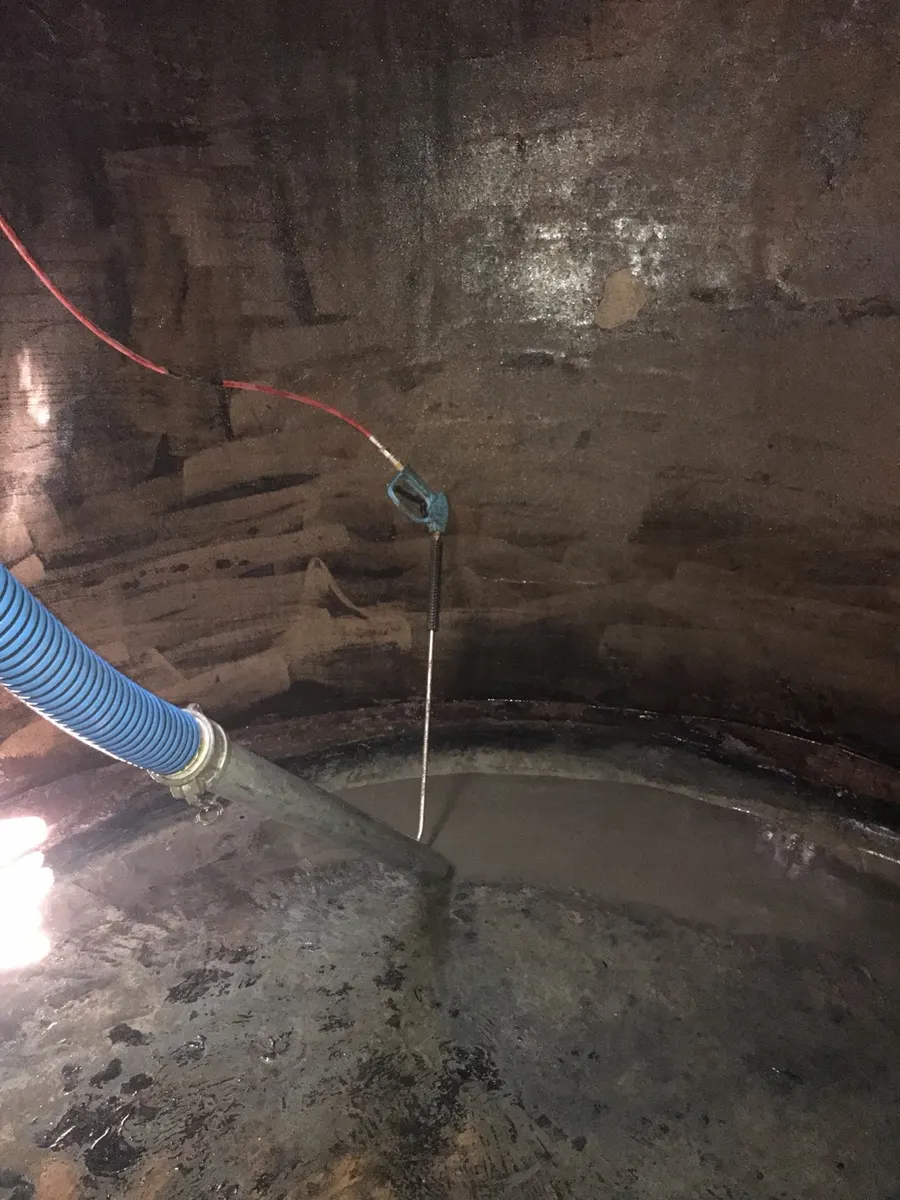
You drink what is in that tank. A professional clean takes the sludge out, pressure-washes the walls and base, and hands the tank back ready for the next rain. That photo behind the words is one of ours, mid-clean.
"Unlike mains pressure drinking water, the rainwater in your tanks is your responsibility. It's up to you to make sure your drinking and washing water is as clean, safe and healthy as you can make it."
That is Paul talking, and he is not against rainwater. The opposite: "I love the taste of fresh clean rainwater better than any mains water I have tried, ever." He has been a plumber for over 45 years, and tanks are the business, septic on one side of the week and drinking water on the other.
Out past the sewer lines, from the Somersby plateau down through the Yarramalong valley and up into the Hunter, the house tank is not a lifestyle feature. It is the water supply. A professional clean every few years is normal maintenance for it, the same as the pump-out is for the septic system on the other side of the yard.
None of this is written to scare you. On the whole, as Paul puts it, Australian rainwater is very clean, some of the best-tasting water you can drink. But it is worth knowing what the roof sends down the pipe, because all of it settles somewhere.
Everything your catchment collects arrives eventually: leaves and organic matter, dust and traffic fallout, droppings from the birds, possums and lizards that walk the ridge capping. The gross filter catches the big pieces. The rest settles on the bottom as sludge, a little more every year.
Frogs, insects, mice and the odd snake find their way into gutters and tanks. Paul's least favourite find is the baited rodent that ends its days in a gutter, leaching what killed it into the water below. He calls that one the "dead rat tea bag", and it is why he checks more than the water level.
Algae and bacteria live happily in tank sludge. Legionella in particular prefers exactly the slime at the bottom of an overdue tank and thrives between 25 and 50 degrees, which is summer tank temperature. An unscreened opening also makes a tank a first-class mosquito nursery.
Paul wrote the long version himself, years ago, and it still holds up: Water Tank Cleaning Tips is his own tour of what turns up in tanks and what you can do about it between cleans.
Ring with your tank size and how long since the last clean, a rough idea is fine. Paul is happy to give tank cleaning advice over the phone, and you get an estimate before any work starts.
The tank does not need to be empty and you do not need to climb anything. Pumping out the water and sludge is part of the service, not a job you do beforehand.
The vacuum hose draws the sediment layer off the bottom of the tank, the mud where the years, the leaves and the bacteria all settle.
A high-pressure water jet works over the internal walls and base. The truck carries its own wash-down water, so the clean does not spend the water you have saved.
A tank is a confined space and gets treated like one: safe entry procedures and the right gear, with an experienced plumber doing the work.
You are left with a tank that is, in Paul's words, "as clean as the day your tank was installed". Most cleans take a few hours, and normal use can usually resume the same day, once the tank refills.
"In Australia professional water tank cleaning generally costs between three hundred and nine hundred dollars. The final price depends on the size of the tank, how long it has been since it was last cleaned and how much sludge or contamination has built up inside."
That is from the Ward Septics pricing guide, written back in 2022, and it is still worth your five minutes: What Does Water Tank Cleaning Cost? sets out the typical range for each tank size, what pushes a job up or down, and exactly what a proper clean includes. For a current number, the estimate on the phone is the one that counts.
The short version is in the table. Your actual number arrives as an estimate before any work starts, the same rule as every Ward job: the price you are quoted is the price you pay.
| Tank size | Typical capacity | Guide price |
|---|---|---|
| Small | 2,000 to 5,000 litres | $300 to $450 |
| Medium | 5,000 to 10,000 litres | $450 to $650 |
| Large | Over 10,000 litres | $650 to $900+ |
From our 2022 pricing guide, so call for a current quote. Every tank is different, and the condition inside moves the number, so treat these as a guide and the estimate as the answer.
Read the full pricing guideMost residential rainwater tanks should be professionally cleaned every two to three years to keep the water quality up and the pump, filters and pipes out of trouble.
Book it sooner if you notice any of these:
Any of those happening at your place right now? That is a phone call, not a mystery. 0438 315 514.
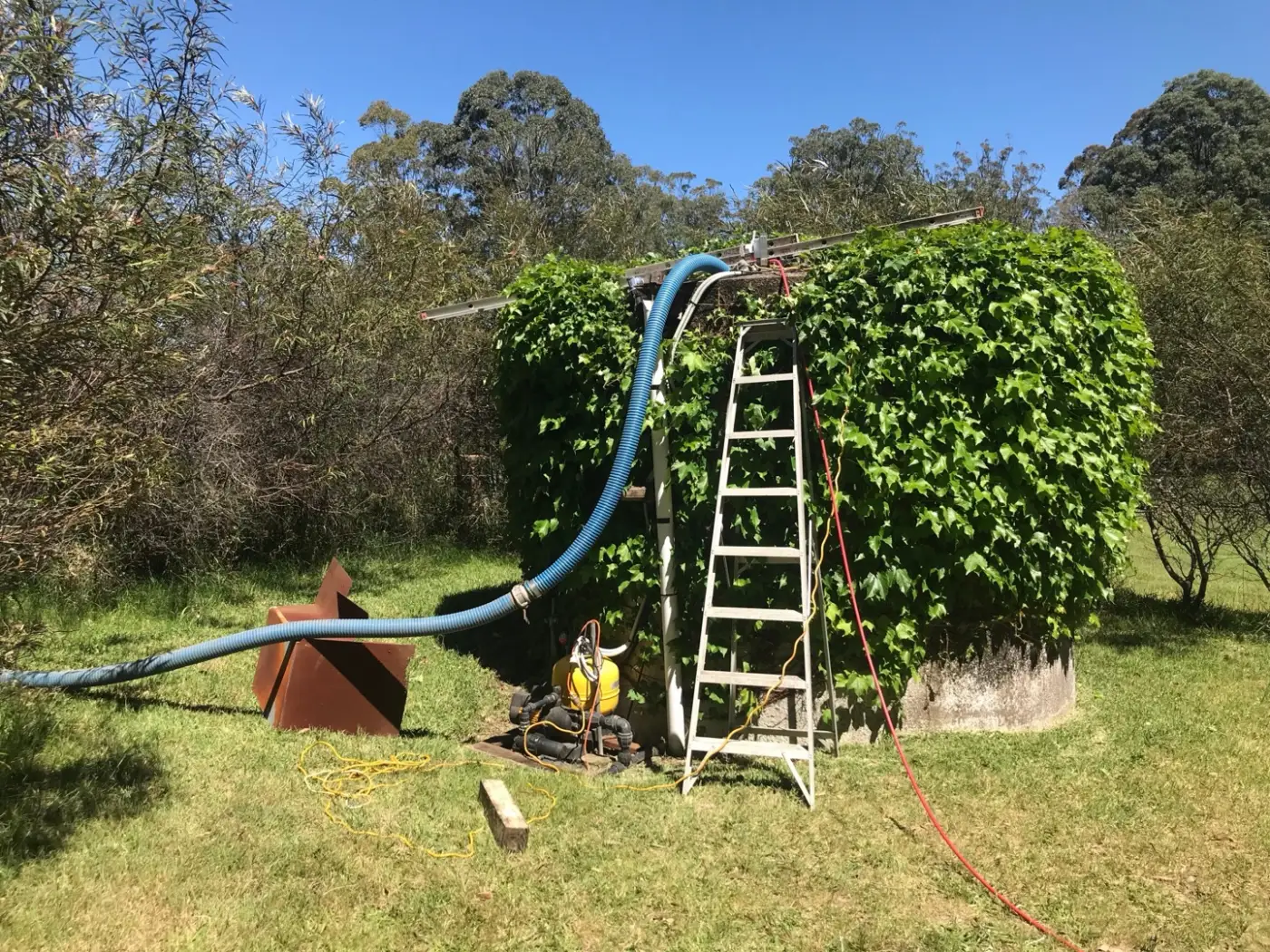
Rainwater tanks live in awkward spots: behind the shed, halfway up a slope, overgrown to the point of being landscape. The truck does not need to get anywhere near yours. With 90 metres of hose on board it stays on the road or the hard stand, the suction line goes over the top of the tank, and the jet line goes down the hatch.
It is the same reach that makes the septic side of the business work on the plateau blocks, and it is why remote and awkward properties are the specialty here, wherever the truck runs, rather than a reason to say no.
If your place drinks its own rainwater, odds are it treats its own waste as well; the two tanks tend to live on the same properties. Ward Septics is one business for both, so mention the septic clean when you book the water tank and Paul will line the jobs up.
The pairing is his own standing offer, "service your septic system properly, or refresh your water tank", in his words, and the schedule bends to yours, not the other way around.
Fantastic service from Paul. Highly recommended. We'll be using Ward Septics for all our tank cleaning requirements and plumbing advice from now on.
For most residential tanks, between $300 and $900 depending on size and how much has built up inside, per our published pricing guide. You get an estimate for your tank before any work starts, so the invoice is never a surprise.
No. Pumping out the water and sludge is part of the service. Leave the tank exactly as it is.
Most residential jobs are done within a few hours. A very large tank, or one that has been left a long time, can take longer, which is the kind of thing Paul flags on the phone rather than on the day.
During the clean itself, yes, the tank is out of action. Normal use can usually resume the same day, once the tank is refilled.
Every two to three years for most households, sooner if the water changes taste or smell, sediment shows at the taps, or something has got into the tank.
Yes, both. Concrete and plastic rainwater tanks each collect the same sludge; the clean is adjusted to the tank, and awkward or overgrown tanks are not a problem.
Almost always. The truck carries 90 metres of hose, so it stays on the road while the hoses walk to the tank. The property stays exactly as it was.
The clean focuses on the inside of the tank. Pumps and filters get looked at along the way, and because Paul is a plumber you get a straight answer on the spot if something needs separate attention, rather than a shrug.
Tell Paul roughly how big the tank is, where it sits and when it last saw a clean. Rough numbers are fine; the answer and the price will both be straight.
Call and you talk to Paul, not a call centre.
Call 0438 315 514