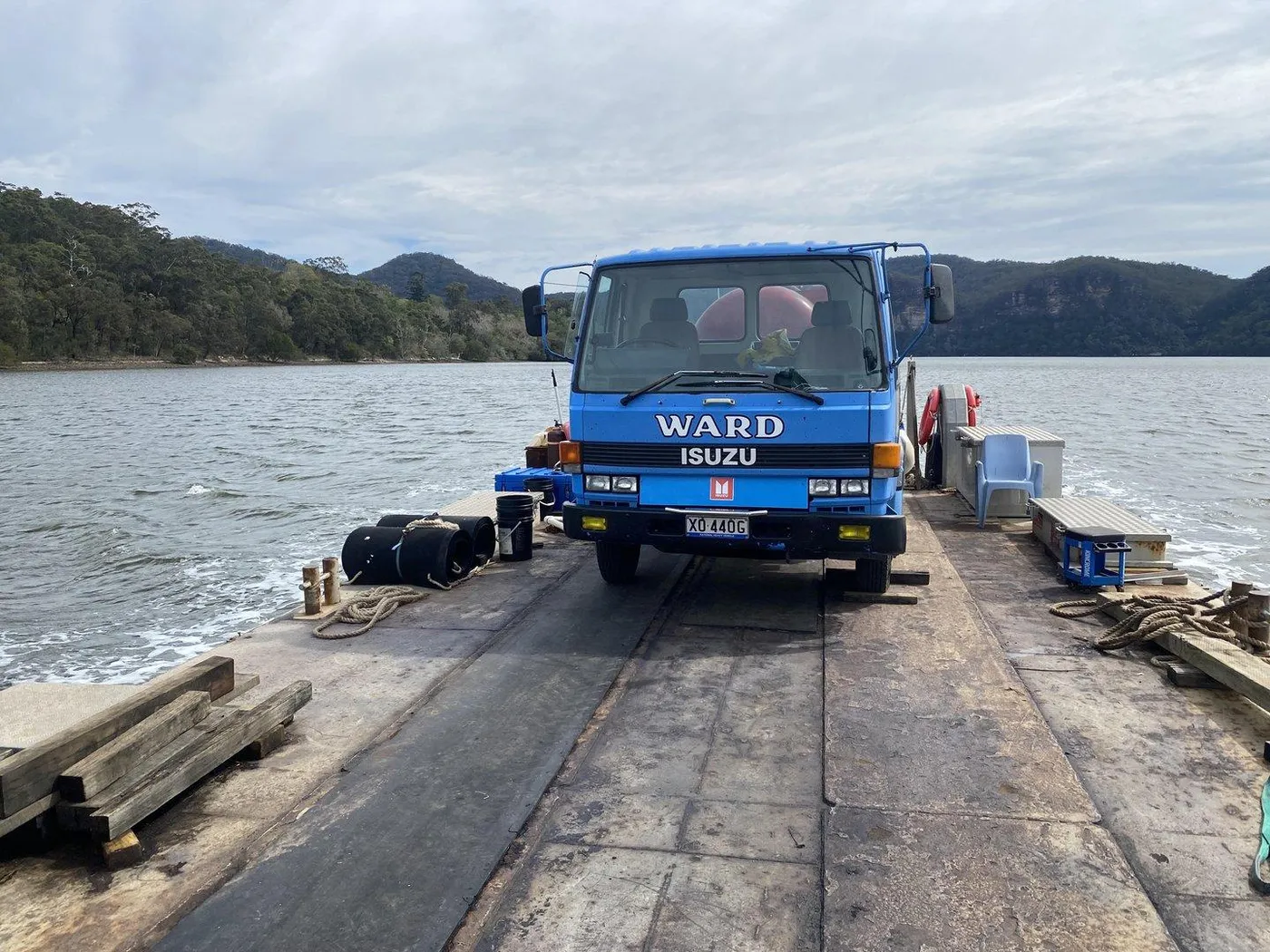
That is not a stock photo. That is the Ward truck crossing the Hawkesbury by barge to reach a tank on the other side. Out here the river decides the route, and the job still gets done.
Most properties in and around Wisemans Ferry have no connection to reticulated sewer. On-site systems handle everything, and in a river valley that raises the stakes: a failing septic near the Hawkesbury is not just a plumbing problem, it is an environmental and compliance risk that councils and the NSW EPA take seriously.
Ward Septics services riverside blocks, hobby farms and rural homesteads across the valley: conventional septic tanks, Flow System units and advanced treatment systems alike. The access conditions here are part of the job, not a reason to turn it down. Narrow unsealed driveways, steep sandstone cuts, flood-prone ground near the water, and the cable ferry queue that every trip across the river starts with. Paul plans each job around all of it, and by his own count he has more than 45 years on the tools, much of that on septic systems in places with far worse access than the Hawkesbury.
And when a tank sits somewhere no road reaches at all, the truck has gone over by barge. That is the photo at the top of this page.
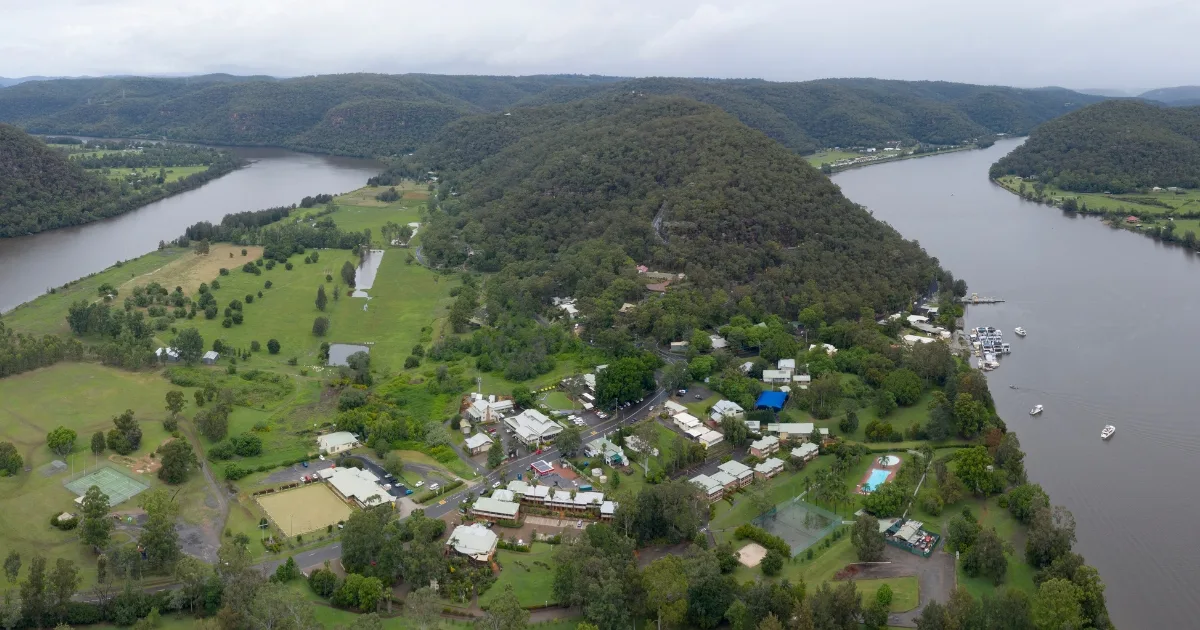
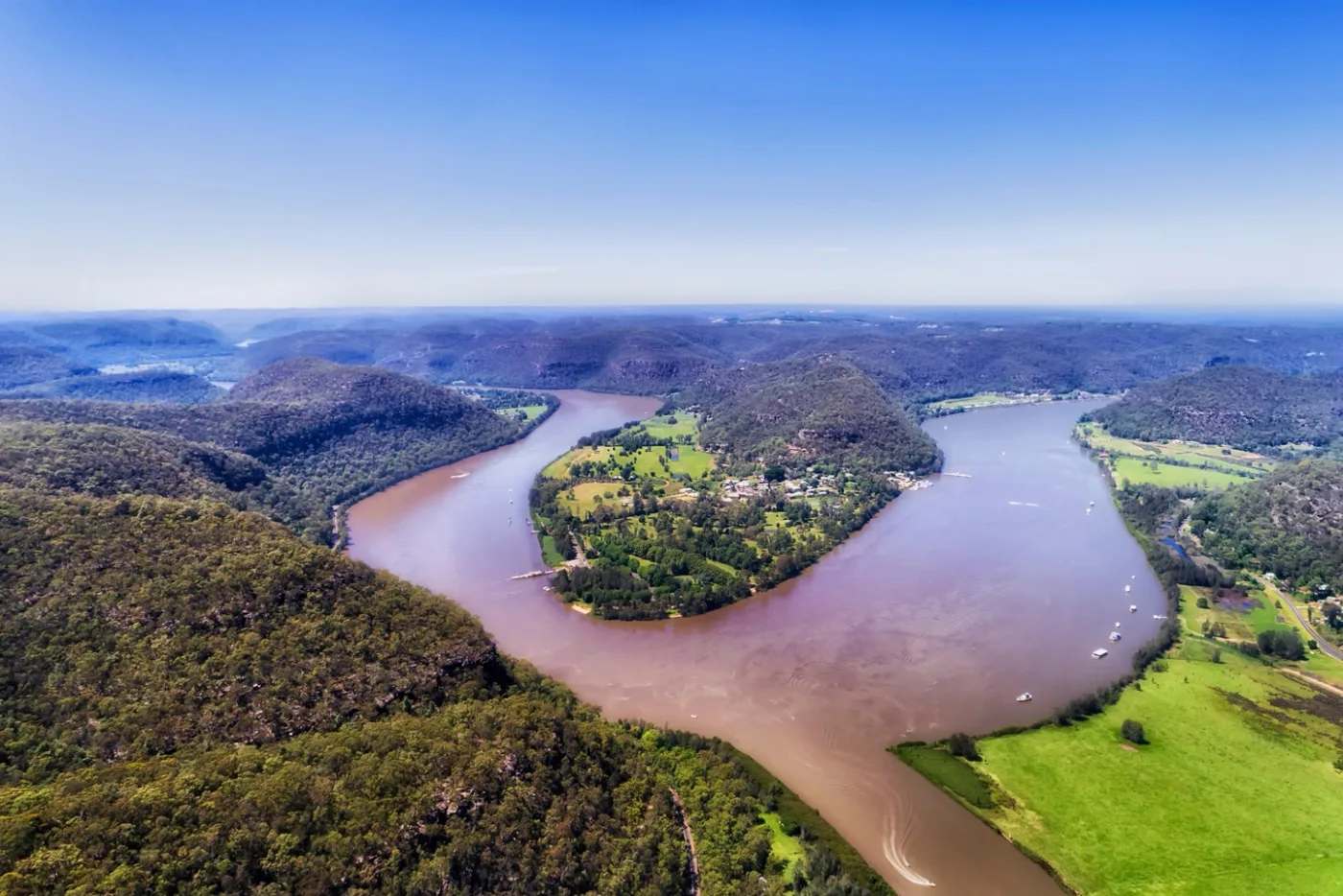
The run works out from the crossing at Wisemans Ferry: the township, the hamlets strung along the river below it, and the high ground behind the banks. All of it is septic country, and all of it gets serviced.
The township on its river bend, and the places a ferry ride away.
Quiet river hamlets, some with more water frontage than road frontage.
Acreage and farm blocks on the high ground above the valley.
If your track has a name only the postie knows, that is normal for this run: ask about your address. Spencer marks where this run meets the hinterland corridor; the other neighbouring runs are the Central Coast, Gosford, Tuggerah & Wyong and Lake Macquarie.
River-frontage blocks around here keep the house near the water and the driveway near vertical. The tank ends up wherever the sandstone allowed, which is rarely anywhere a loaded vacuum truck should drive. So the truck does not drive there: it parks on the road edge or the hardstand, and 90 metres of hose does the walking, down the drive, through the gate, to the far side of the shed if that is where the lid is.
The truck itself was specially built for this kind of country, with a smaller wheelbase and a more efficient sized tank than the big pump-out rigs, so the tight bends and unsealed tracks off the river road are a normal day, not an obstacle course. Booked in with the clean, the jet clears roots and debris from the inlet pipes while the truck is there: one trip across the river instead of two.
Every job finishes the same way, wherever it started: waste carried in a sealed, licensed tank to an approved treatment facility, nothing discharged on site or in transit, and paperwork available if you want it.
High rainfall, heavy soils and seasonal flooding mean a septic system under stress near the river becomes a problem faster than the same system would in a suburban street. Any of these means book a pump-out now, not next quarter:
A scheduled pump-out is always cheaper than an emergency callout, and much cheaper than a compliance notice from council.
| People in the household | Recommended service interval |
|---|---|
| 1 to 2 people | Every 4 to 5 years |
| 3 to 4 people | Every 3 to 4 years |
| 5 or more people | Every 2 to 3 years |
Low-lying flood-affected blocks near the river, clay soils, high water tables and ageing systems all shorten those intervals. If in doubt, Paul will assess your setup on the first visit and give you a tailored recommendation, in writing, with the audit.
Every three to four years suits most rural residential properties here. Smaller tanks, bigger households and low-lying flood-affected blocks near the river usually need it more often, the guide further up this page shows how the household size shifts it. After your first service you get a tailored recommendation for your actual tank, not a generic one.
Wisemans Ferry, Laughtondale, Gunderman, Wendoree Park, Webbs Creek, Central Colo, Spencer, Canoelands, Maroota, Marlow and Singletons Mill, plus the river stretch down through Lower Mangrove and Mangrove Creek. If your spot is not on that list, call anyway: the list is shorter than the run.
No, it is the start of a conversation about access. The photo at the top of this page is the Ward truck crossing the Hawkesbury on a barge to reach exactly that kind of property. Where standard truck access is not possible, the options get discussed before the visit, so nobody wastes a day finding out.
Yes. A system that overflows on river-frontage or creek-adjacent ground can contaminate waterways and breach the Protection of the Environment Operations Act, which can bring EPA or council action. Regular pump-outs are the most practical way to keep well clear of all that.
It travels in a sealed, licensed pump truck to a council approved treatment facility. Nothing is discharged on site or in transit, the work complies with NSW EPA requirements, and documentation is available on request.
Yes, Flow Systems and advanced treatment units are serviced across the Wisemans Ferry area. They typically want attention every six to twelve months, more often than a conventional tank, so they are worth putting on a schedule.
Yes. Most properties out here drink their own tank water, and water tank cleaning rides on the same truck. One trip over the ferry instead of two is worth real money on this run.
Tell Paul where you are on the river and what the access is like, ferry side included. You get a straight answer and an estimate over the phone before anything starts, and if the job needs a barge, that would not be a first.
Call and you talk to Paul, not a call centre.
Call 0438 315 514