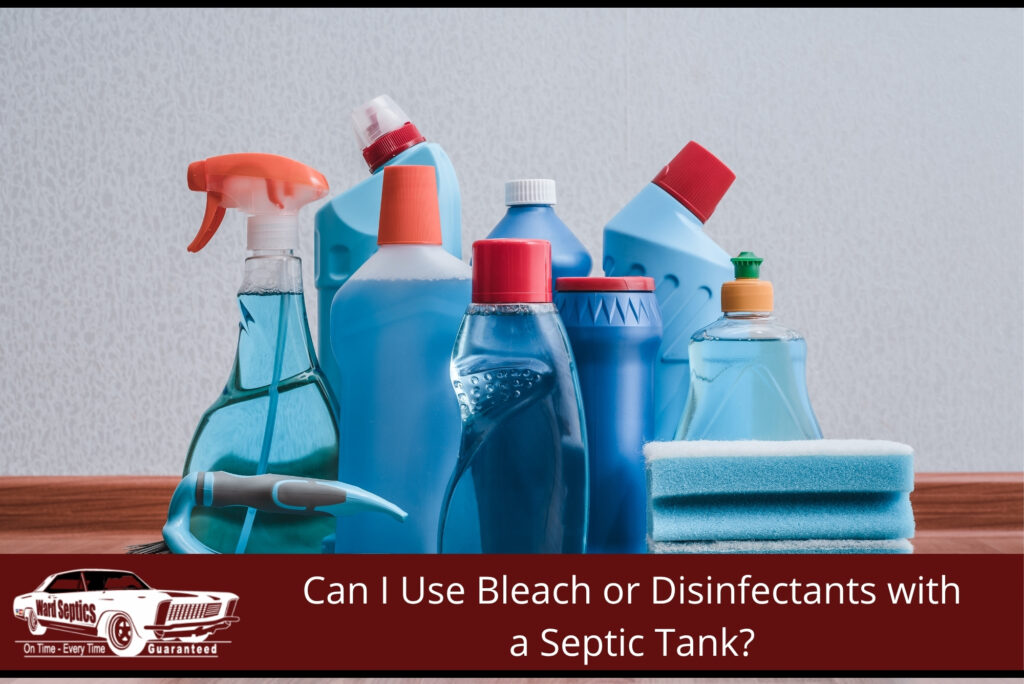
It’s one of the most common questions we hear from homeowners on a septic system: “Is it safe to use bleach or disinfectants if I have a septic tank?” The short answer is; it depends entirely on how much you use. Read on for the full picture.
How a Septic Tank Actually Works
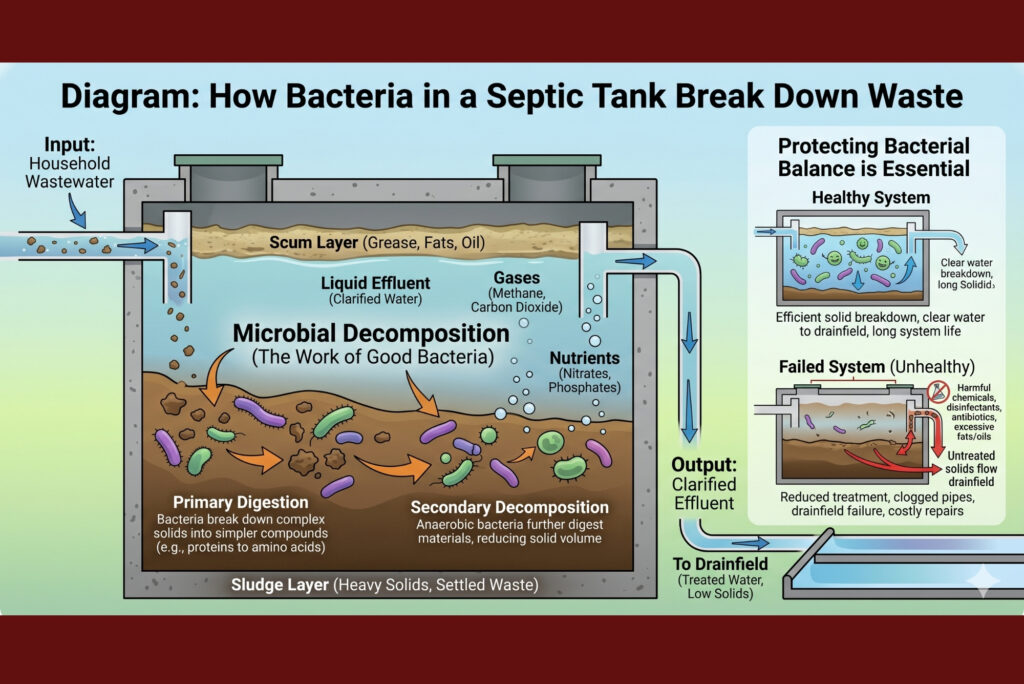
Before we dive into cleaners, it helps to understand what’s happening inside your tank. A healthy septic system relies on billions of naturally occurring bacteria to break down the solid waste that flows in from your home. These microorganisms are the engine of the whole system without them, solids accumulate, pipes back up, and your drain field can fail.
Anything that enters your drains such as washing machine water, toilet flushes, sink drainage, eventually makes its way into the tank. That means every cleaning product you use at home has the potential to affect your septic system’s bacterial balance.
| KEY FACT | Bacteria are responsible for breaking down most of the solid waste in your septic tank. Disrupting this bacterial population even temporarily can cause costly problems including sewage backups, drain field damage, and foul odours. |
Is Bleach Safe for Septic Tanks?
The answer is both yes and no, and the difference comes down to volume and frequency.
Small amounts: Generally fine
Using a moderate amount of bleach, such as three-quarters of a cup in a normal load of laundry is unlikely to cause lasting harm to your septic system. By the time diluted bleach travels through your pipes and into the tank, much of its antibacterial potency has already been spent reacting with soils and organic matter along the way.
Large or frequent amounts: A serious problem
Pour too much bleach down your drains regularly, and you risk wiping out the bacterial colony your tank depends on. As little as two gallons of chlorine bleach can kill the functioning bacteria in a standard 1,000-litre septic tank. Without those bacteria, solid waste stops breaking down which may lead to blockages, backups, and potentially very expensive repairs.
| AVOID THESE HABITS | Pouring undiluted bleach directly down drains, using clip-on bleach toilet tablets (which release chlorine with every flush), soaking showers and tiles in straight bleach, or running multiple heavy-duty cleaning loads in quick succession. |
What About Disinfectants and Antibacterial Products?
Bleach isn’t the only concern. A wide range of common household products contain antibacterial or antimicrobial agents that can be just as damaging to your septic system.
Products to be cautious with include antibacterial soaps and handwashes, disinfectant sprays, laundry sanitisers (even non-bleach formulations), toilet bowl cleaners, and drain cleaning chemicals. Drain cleaners are particularly harmful and should be avoided wherever possible — reach for a plunger instead.
When checking product labels, watch out for these active ingredients, which signal strong antimicrobial properties:
- Sodium hypochlorite is one of the main components in chlorine bleach, also listed as hypochlorite sodium or sodium oxychloride.
- Ammonium quaternary compounds (QUATs) are found in many toilet cleaners, hand soaps, and baby products.
- Triclosan is a common antibacterial agent in soaps and surface cleaners.
- Pine oil and phenolic compounds can be found in some traditional disinfectants and floor cleaners.
Safer Alternatives for Homes on Septic
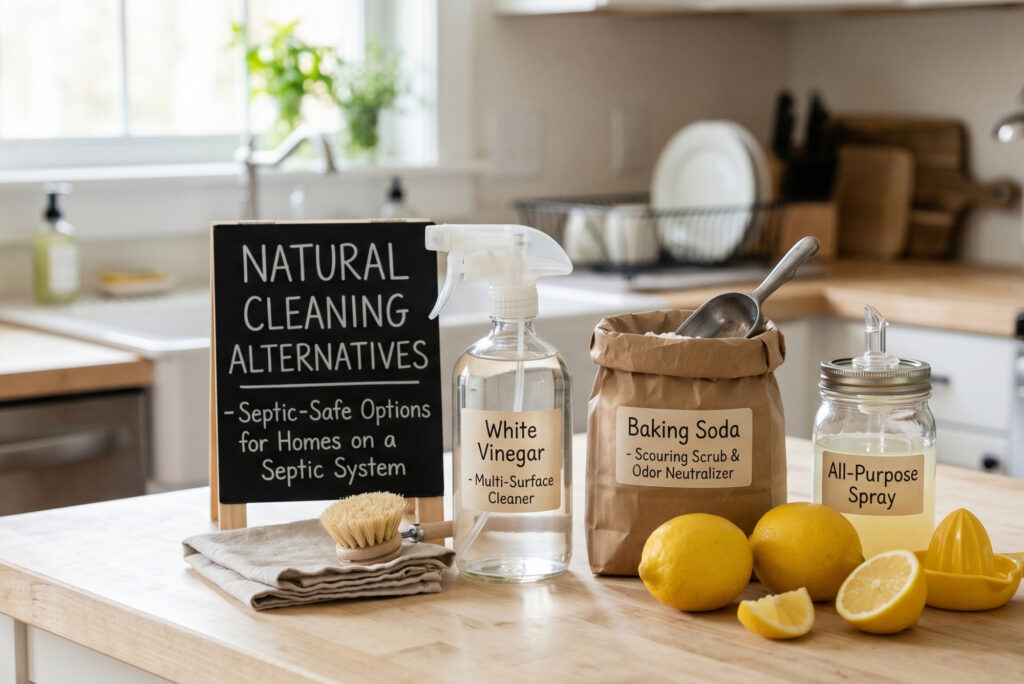
The good news is that keeping a clean home doesn’t require harsh chemicals. There are several effective, septic-safe alternatives that clean well without disrupting your tank’s bacterial environment.
| Product / Ingredient | Septic Impact | Status |
| White vinegar | Natural sanitiser; no harm to bacteria at normal use. | SAFE |
| Baking soda | Gentle cleaner; can support bacterial activity by balancing pH. | SAFE |
| Hydrogen peroxide (3%) | Non-toxic disinfectant; breaks down to water and oxygen. | SAFE |
| Lemon juice | Natural antibacterial properties; safe in normal quantities. | SAFE |
| Biodegradable / septic-safe cleaners | Formulated to minimise bacterial disruption | SAFE |
| Chlorine bleach (small amounts) | Safe in moderation; max 3/4 cup per laundry load. | CAUTION |
| Antibacterial soaps & sprays | Frequent use disrupts bacterial balance | CAUTION |
| Chemical drain cleaners | Highly toxic to septic bacteria; can cause serious damage. | AVOID |
| Large volumes of bleach | Can kill off the tank’s entire bacterial population. | AVOID |
| Solid bleach toilet tablets | Continuous chlorine release harms bacteria with every flush. | AVOID |
What to Do If You’ve Used Too Much Bleach
If you suspect you’ve been heavy-handed with bleach or disinfectants over a period, don’t panic, the damage may be reversible with a few simple steps.
- Stop using bleach-heavy products immediately and switch to septic-safe alternatives.
- Introduce beneficial bacteria back into the system. Some plumbers recommend flushing a sachet of brewer’s dry yeast down a toilet once a month.
- Ask your septic professional about septic tank enzyme treatments, which can help restore and accelerate bacterial activity.
- Have your tank inspected and pumped if you’re noticing slow drains, gurgling sounds, or wet patches near the drain field
“Moderation is the name of the game when it comes to bleach and a septic system. Small, diluted amounts won’t cause lasting harm, but consistent overuse is a recipe for expensive repairs.”
Practical Tips for Everyday Cleaning on Septic
Here are some straightforward habits that make a real difference to your septic system’s long-term health:
- Spread laundry loads throughout the week rather than doing multiple loads back-to-back — this limits the concentration of any cleaning agents entering the tank at once
- Always dilute bleach with water before use, and use the minimum effective amount
- Replace antibacterial soaps with plain soap, they’re just as effective for everyday handwashing and won’t harm your system
- Avoid pouring chemicals such as paint, solvents, pesticides, or cooking oils down the drain — these don’t just harm bacteria; they can contaminate groundwater
- Schedule regular septic tank pumping (generally every 3–5 years for a household system) to remove accumulated solids
- If you’re unsure about a specific product, look for the “septic safe” label, or contact a licensed septic technician for advice
| BOTTOM LINE | You don’t need to give up on a clean home to protect your septic system. Use bleach and disinfectants sparingly, choose biodegradable alternatives where you can, and have your tank serviced regularly. Small changes in your cleaning routine can add years to the life of your system. |
Professional Septic Services
Due for a pump-out or concerned about your system’s health? Our team services homes across Australia.