
The short answer: as far from your water sources as regulations require, downhill from the house, and somewhere a truck can reach when it needs servicing.
That sounds simple but get the placement wrong and you are looking at a very expensive fix down the track. I have been working with septic systems for over 45 years, from remote properties on the Central Coast to rural blocks through the Hunter Valley. The most common problems I see start with a tank that was put in the wrong spot.
Here is what to consider before anything goes in the ground.
Distance from water sources
This is the non-negotiable one. Under NSW regulations, a septic tank must sit at least 6 metres from any building and at least 15 metres from any water source. Water sources include bores, wells, dams, creeks and drainage lines.
On rural properties, that can be tricky. If your block has a bore for drinking water, the tank needs to go as far in the opposite direction as your block allows. Effluent travels through soil. Distance is your buffer.
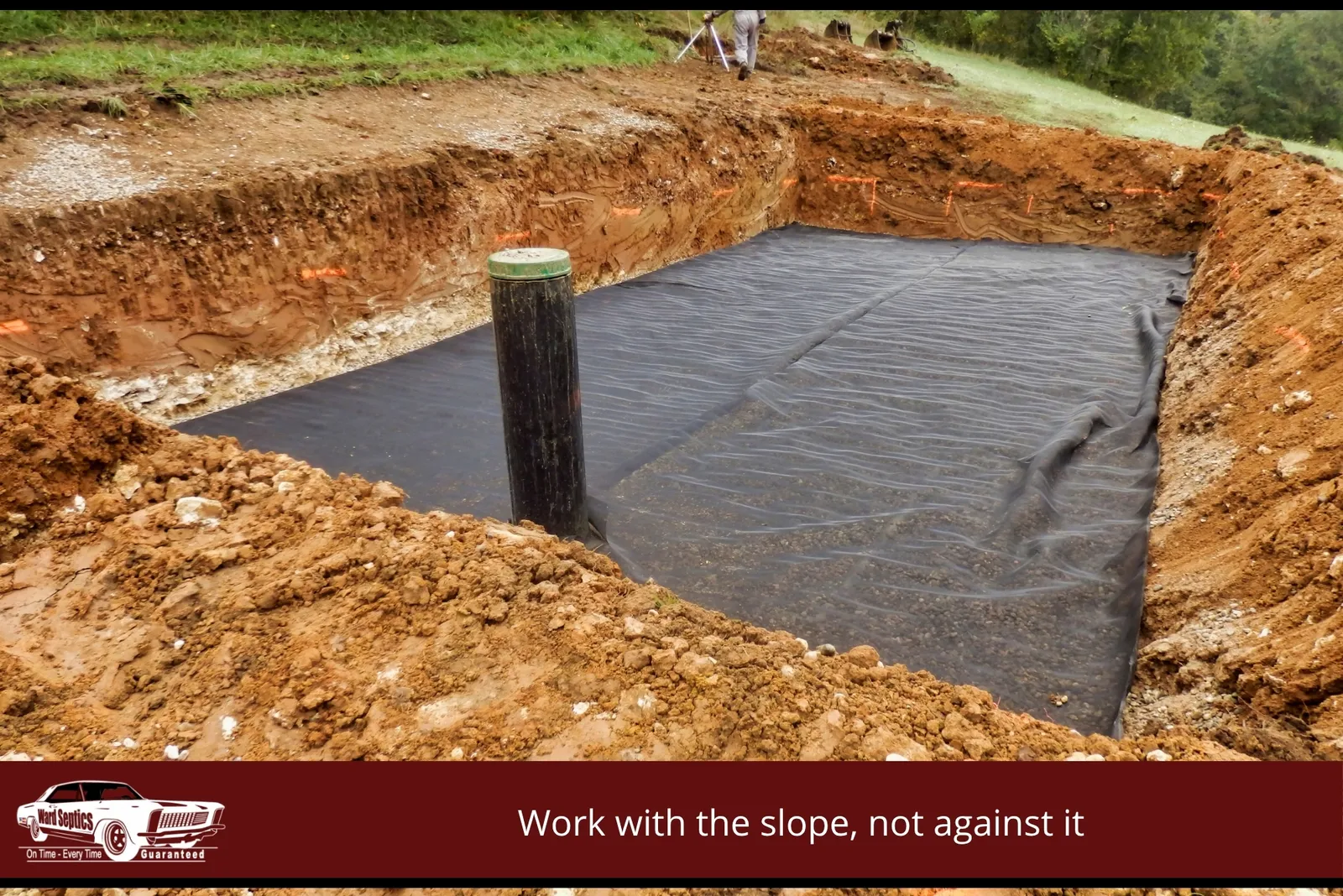
Work with the slope, not against it
Gravity does a lot of the work in a well-positioned system. The tank should sit downhill from the house so waste flows out naturally. If your site forces the tank uphill, you need a pump-out system, which adds cost and one more thing to maintain.
The absorption trenches that follow the tank also need the right fall. Too steep and effluent races through without proper treatment. Too flat and it pools. A licenced plumber or drainer should assess the slope before you commit to a position.
Soil type matters more than most people realise
Absorption trenches rely on soil to filter and disperse effluent. Sandy, well-draining soil works well. Heavy clay is a problem. Clay saturates, stops draining, and the whole system backs up.
A percolation test tells you how well the soil absorbs water. This is done before installation and determines how long your absorption trenches need to be. Skip this step and you might end up with trenches that are too short for your soil conditions.
In parts of the Central Coast and lower Hunter, you hit clay layers not far below the surface. That is not the end of the world, but it does affect how the system needs to be designed.
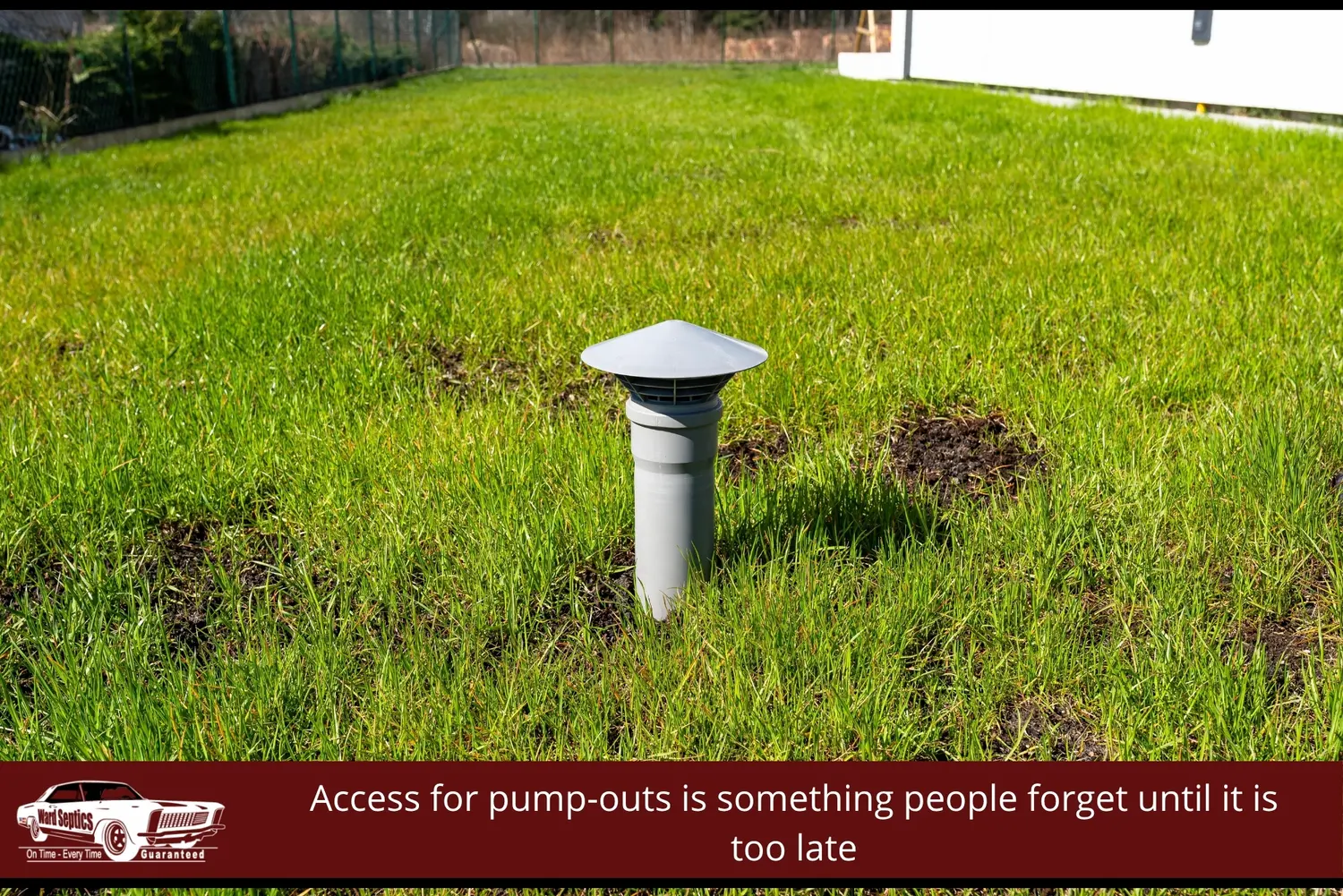
Access for pump-outs is something people forget until it is too late
A septic tank needs to be pumped out regularly, usually every three to five years depending on the household size. That means a truck needs to get close enough to reach it.
My truck carries 110 metres of pump-out hose, so I can park on a driveway and reach tanks that are well into a property. But some tanks get buried under extensions, decks, or garden beds and become almost impossible to service without major disruption. If the tank location makes future pump-outs difficult, the cost of servicing goes up every time.
Put the tank somewhere a service vehicle can reach. Even if that means it is not in the most convenient spot now, it will save you grief later.
Keep it away from trees
Tree roots follow water and nutrients. A septic tank is a reliable source of both. Roots work their way into joints and pipes over time, and once they are in, they cause blockages and damage that is expensive to fix.
The general rule is to keep the tank and absorption trenches at least 3 metres from any tree and further for larger species with aggressive root systems. Eucalypts are a common offender on rural properties.
Council approval and your On-site Sewage Management approval
In NSW, any septic system installation requires approval through your local council under an On-site Sewage Management (OSSM) approval. The exact setback distances and soil requirements will be specified in your approval.
The council will generally want to see a site assessment before signing off. This is not just red tape. It exists because a badly placed system can contaminate groundwater and affect neighbours on nearby blocks.
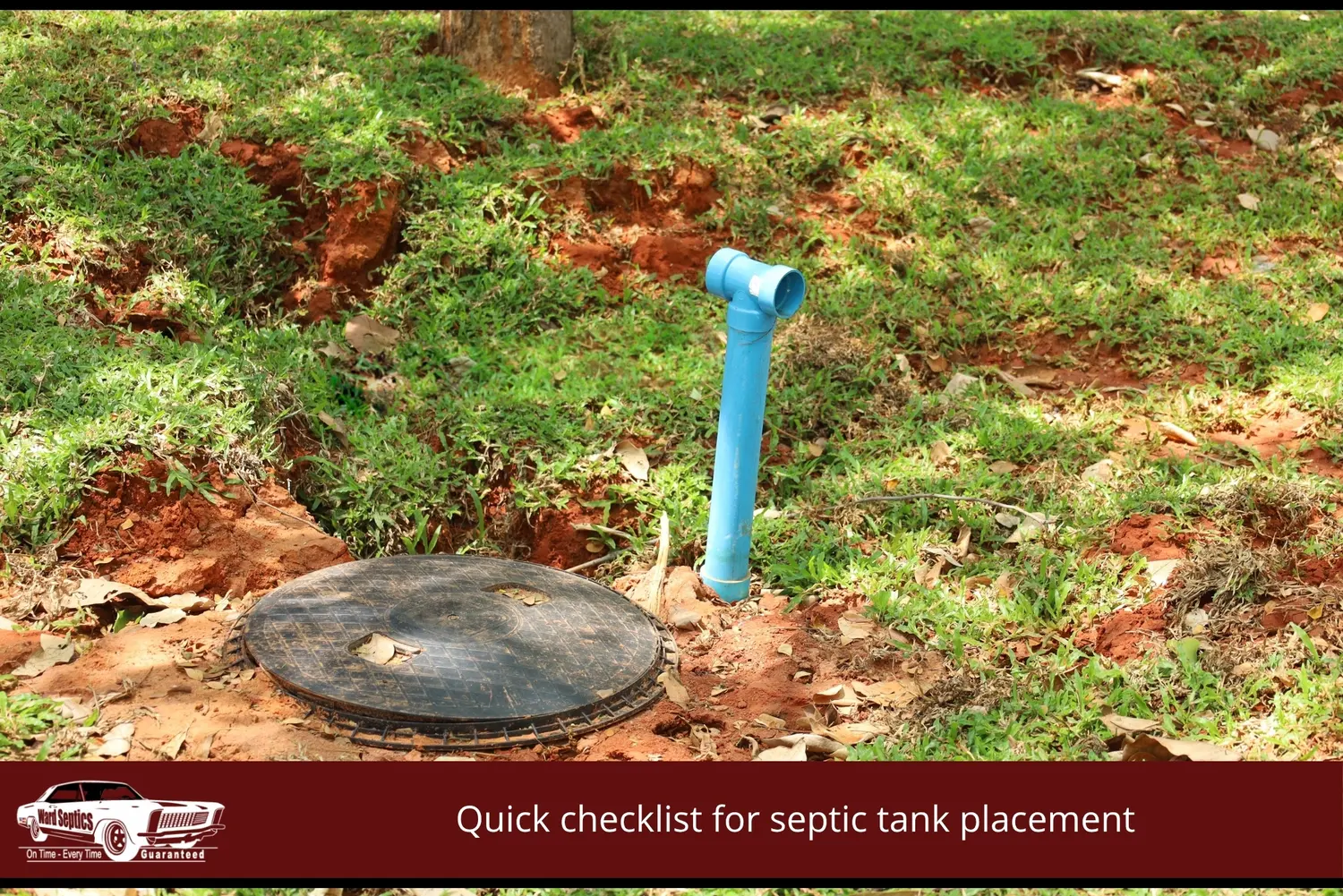
Quick checklist for septic tank placement
- At least 6 metres from any building.
- At least 15 metres from any water source (bore, dam, creek, drainage line).
- Downhill from the house where possible.
- Soil percolation test done before trenches are sized.
- Clear vehicle access for future pump-outs.
- At least 3 metres from trees (more for large species).
- Council OSSM approval in place before installation.
Need advice on your property?
If you are planning a new system or have questions about an existing one on the Central Coast or in the Hunter Valley, give me a call. I specialise in remote and rural properties that other operators are not set up to handle, and I am happy to talk through your situation before you commit to anything.
Call Paul on 0438 315 514.