
A septic absorption trench usually lasts between 15 and 25 years when it is designed and maintained correctly. Some systems may function longer under ideal conditions, while others fail earlier if neglected or overloaded.
The trench works alongside the septic tank, dispersing treated wastewater into the soil for filtration. Its lifespan depends on several factors, including soil type, household water usage, and how well the system is maintained. Sandy or loamy soils generally support longer life, while heavy clay may shorten it.
Knowing the typical range helps homeowners plan for inspections, maintenance, and eventual replacement. This article explains the key influences on trench lifespan, the signs of failure to watch for, and steps to extend performance before replacement becomes necessary.
Typical Lifespan of an Absorption Trench
The average lifespan of a septic absorption trench is 15 to 25 years. Some systems continue working for longer, but lifespan can be reduced when soil conditions are poor, water use is excessive, or maintenance is irregular.
Several factors influence how long a trench will last
- Soil type influences performance, with sandy or loamy soils draining more effectively while clay soils can become waterlogged
- Water usage affects the system, as large households or heavy daily flows place extra strain on the trench
- Design quality matters, since a trench built to match site conditions will last longer than one that is undersized or poorly installed
- Maintenance plays a role, with regular pumping and inspections helping prevent clogs and extending service life
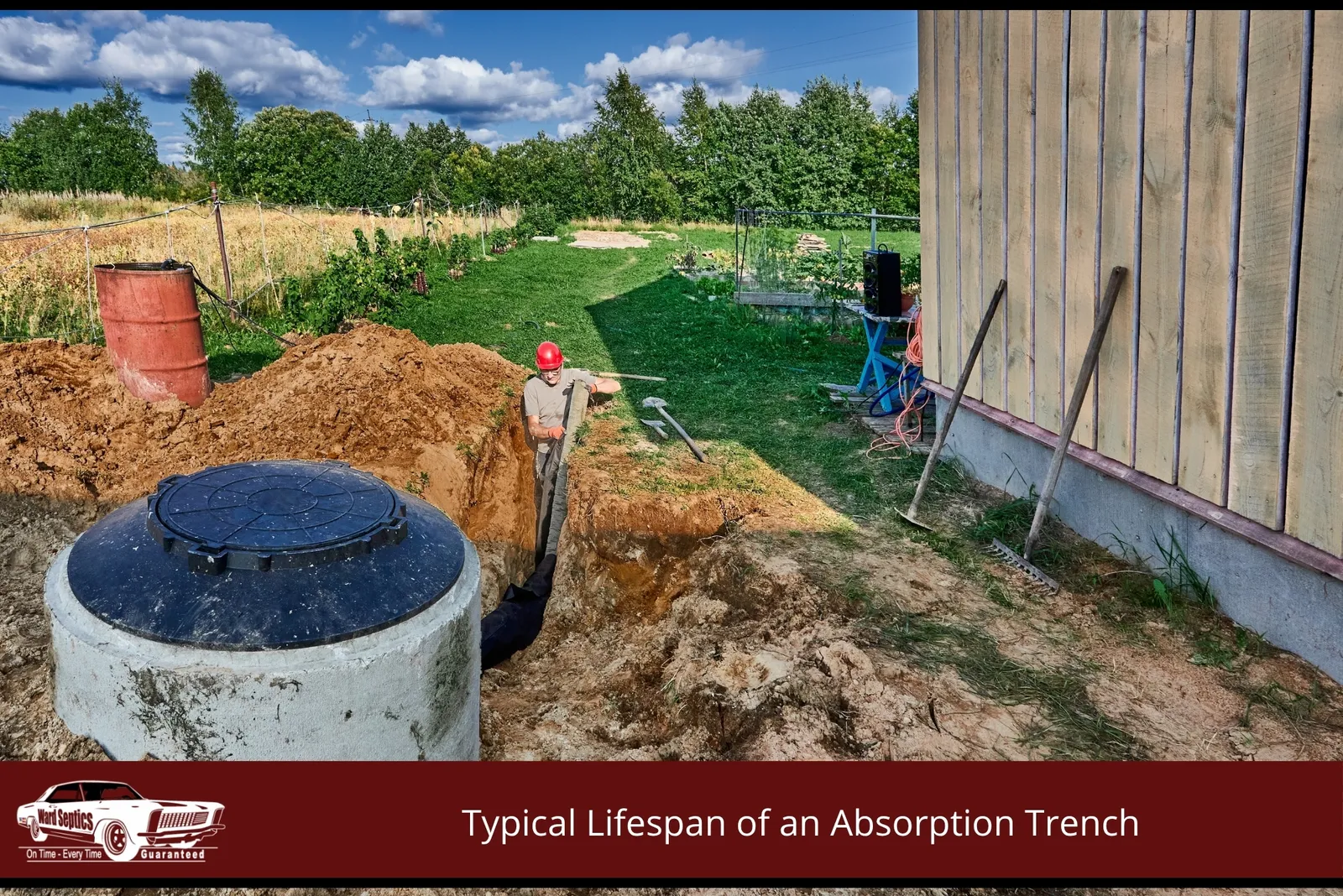
Absorption trenches are not permanent and eventually require renewal. Planning for their replacement reduces the risk of sudden failure that can cause costly repairs or health issues.
Signs Your Absorption Trench is Failing
Even well-designed trenches eventually lose effectiveness. Spotting early warning signs helps avoid major problems and protects household health.
Common indicators of trench failure include
- Slow drainage inside the home, especially from sinks and toilets
- Odours around the trench or tank area caused by effluent surfacing
- Pools of wastewater or soggy ground above the trench line
- Unusually green or fast-growing grass directly over the trench area
These symptoms often mean the trench is near the end of its service life or is being stressed by excess water or poor soil conditions. Acting quickly can prevent system-wide damage and reduce repair costs.
If you are already experiencing these issues, professional help is essential. Learn more about how experts address absorption trench problems and the solutions available.
How to Extend the Life of Your Absorption Trench
While trenches are not permanent, good maintenance can maximise their working life and delay replacement. Simple practices help keep the system functioning effectively.
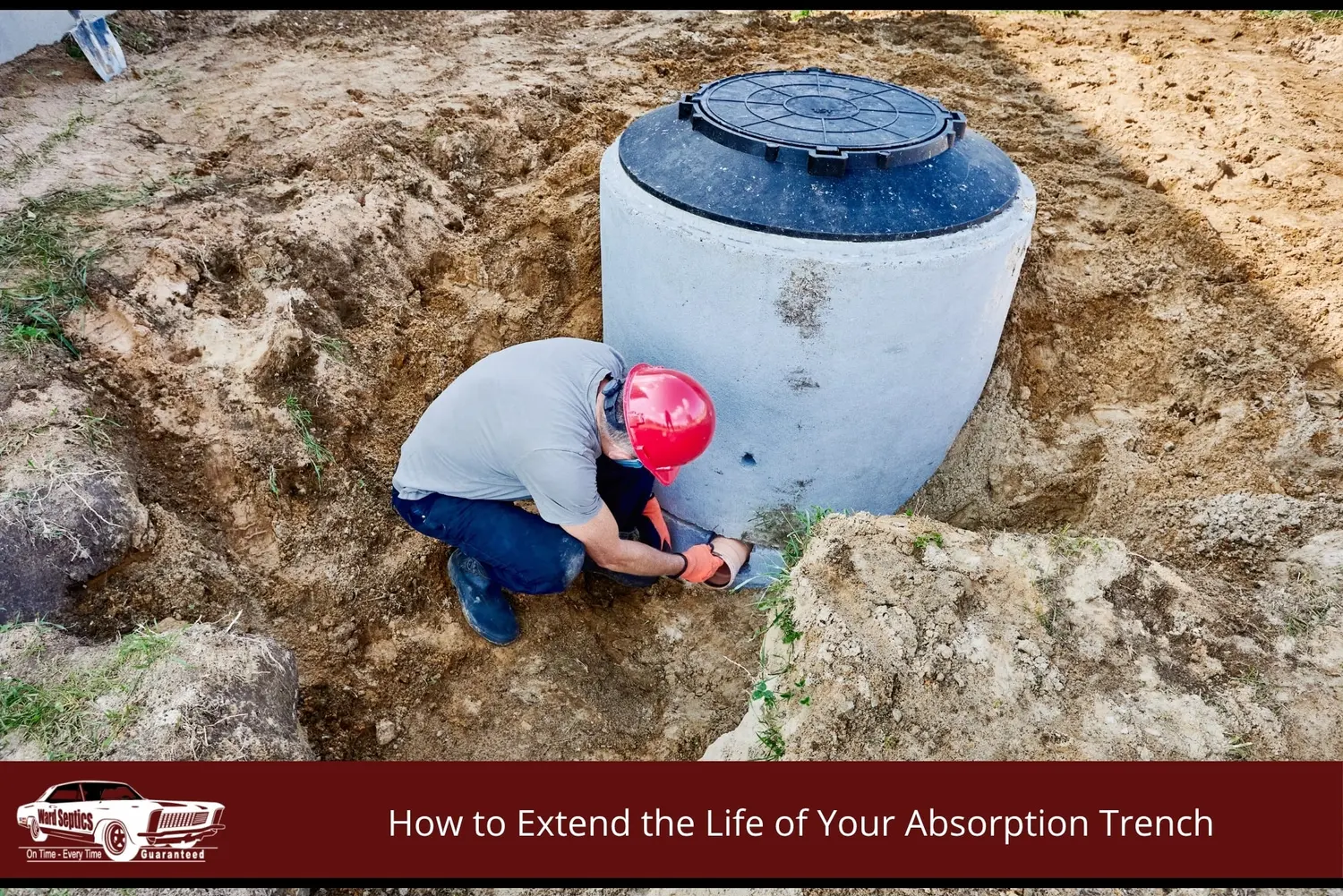
Ways to extend trench lifespan include
- Pump the septic tank on a regular schedule to stop solids from reaching the trench
- Spread out water use such as laundry and showers to avoid sudden overloading
- Keep vehicles, heavy equipment, and structures away from the trench area to prevent soil compaction
- Choose septic-safe cleaning products that support the natural bacteria needed for waste breakdown
- Arrange regular inspections to detect issues early and make small adjustments before major problems develop
Households that follow these steps often see their absorption trenches reach the higher end of the 15 to 25 year range. Consistency is key, as ongoing care prevents premature failure and supports reliable wastewater treatment.
What to Do When a Trench Reaches the End of Its Life
When an absorption trench no longer works effectively, short-term fixes will not restore full function. Long-term solutions focus on repair, renewal, or system upgrades.
Options to manage a failed trench include
- Soil rejuvenation methods such as soil fracturing, which can restore absorption in certain sites
- Installing a new trench in a different part of the property where conditions are more suitable
- Upgrading to an alternative wastewater treatment system when soil type, household size, or site layout no longer supports a trench system
A licensed septic professional should assess the site to recommend the most suitable option. The right choice depends on property conditions, local regulations, and long-term maintenance requirements.
Why Professional Advice Matters
The lifespan of an absorption trench varies with property conditions, soil type, water use, and rainfall patterns. Because no two sites are identical, professional guidance is essential for accurate assessment and planning.
Licensed specialists can carry out detailed inspections, identify early signs of wear, and advise on the best maintenance schedule. They also provide recommendations for system upgrades or replacement when needed, ensuring compliance with environmental and health standards.
If you think your trench may be nearing the end of its service life, arrange an inspection through Septic Cleaning to discuss the best options for your property.

Keeping Your Septic System Working for the Long Term
Absorption trenches are not designed to last forever, but careful management can extend their service life and reduce unexpected failures. Regular inspections, consistent maintenance, and mindful water use all help the system operate effectively.
Understanding the average lifespan and watching for warning signs allows homeowners to act before problems escalate. Planning for eventual replacement ensures the property remains safe, healthy, and compliant with regulations.
Working with experienced professionals also ensures that any new trench or upgraded system is properly designed and installed. This provides long-term reliability, protecting both the home and the surrounding environment.
FAQs
How often should a septic absorption trench be inspected?
Inspections are generally recommended every one to two years, especially in older systems or properties with heavy water use.
Can an absorption trench be relocated?
Yes. If the current area becomes unsuitable due to soil conditions or space limits, a new trench can be installed in another part of the property.
What is the main cause of early trench failure?
Excess water loading is a common reason. Overuse from household activities or leaks can saturate the soil and reduce absorption capacity.
Are there alternatives to absorption trenches?
Yes. In some sites, wastewater treatment systems or sand filters are installed where trenches are not effective or permitted.
Who should I contact if my trench shows problems?
A licensed septic professional can assess the situation and advise on repair, soil rejuvenation, or system replacement if required.