
If your property is not connected to a centralised sewer system, a septic tank and a composting toilet are the two most common ways to manage household waste. They solve the same basic problem in very different ways, and the right choice depends on your water supply, your budget, your land, and how hands-on you want to be with maintenance. This guide explains exactly how each system works and where each one makes the most sense.
How a Septic Tank System Works
A septic tank is an underground chamber, usually with two compartments, that treats household wastewater before releasing it back into the environment. Raw wastewater, including everything that goes down your toilet, sink, shower, and laundry, flows into the primary chamber, where heavier solids settle to the bottom as sludge and lighter material such as fats and oils rise to form a layer of scum on top. Naturally occurring bacteria inside the tank break down the organic material over time, while the partially clarified liquid in the middle layer moves through to the secondary chamber for further treatment.
From there, the treated effluent is dispersed into a drainage field, sometimes called an absorption trench or leach field, where it percolates through the surrounding soil. The soil acts as a final natural filter, removing the remaining pathogens and nutrients before the water rejoins the broader water cycle. This entire process relies on water to carry waste through the system and on healthy soil to complete the treatment, which is why septic systems are generally suited to properties with reliable water access and adequate land with reasonable drainage characteristics.
Once a septic system is properly installed, it requires comparatively little day-to-day attention. The main ongoing task is having the tank professionally pumped out every three to five years to remove accumulated sludge that the bacteria cannot fully break down. Beyond that, a well-maintained system can run reliably for several decades.
| KEY POINT | A septic tank treats greywater and blackwater together as one combined wastewater stream. This is one of its biggest practical advantages over a composting toilet, which only deals with toilet waste and leaves the household's greywater, from showers, sinks, and laundry, to be managed separately. |
|---|
How a Composting Toilet Works
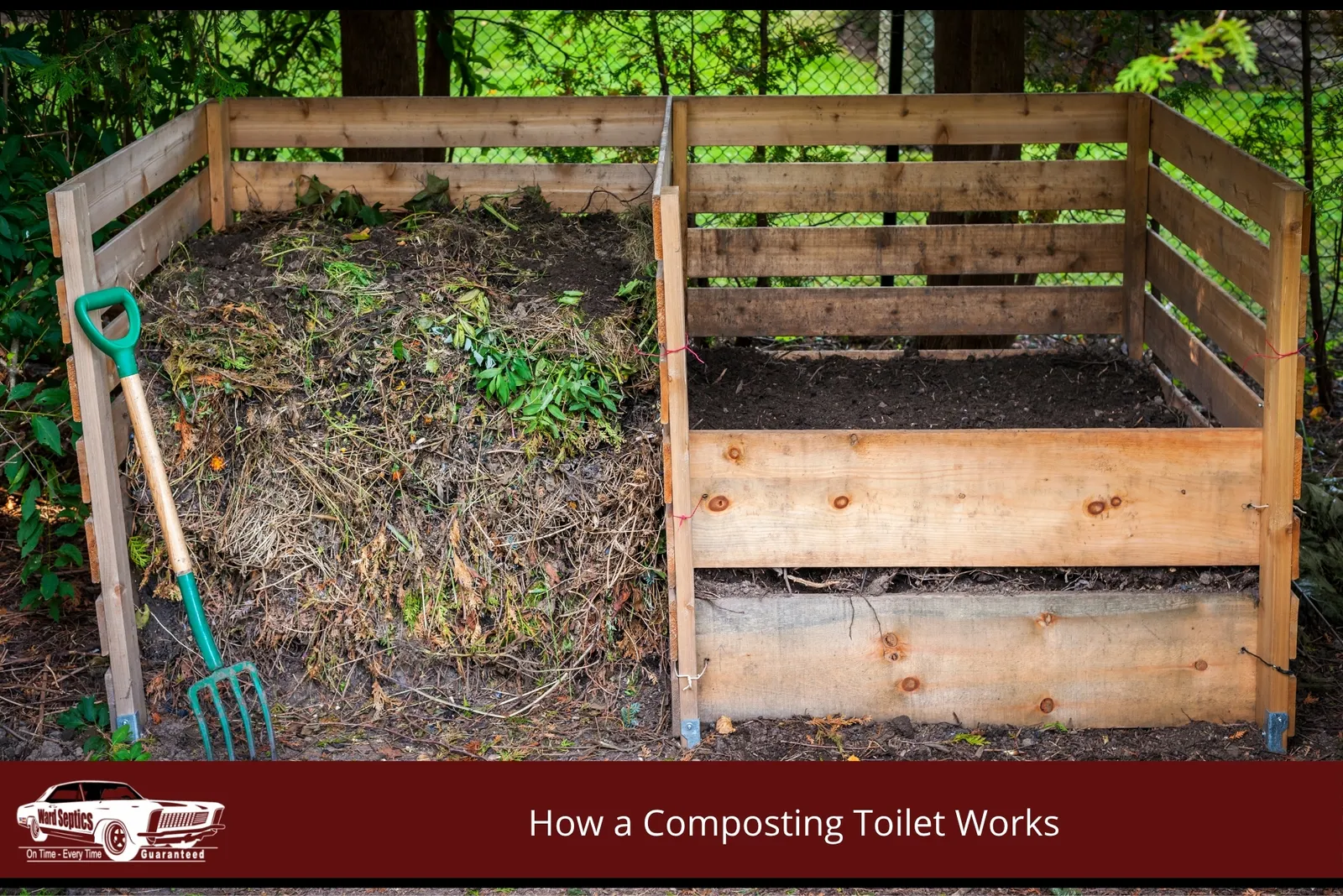
A composting toilet takes a fundamentally different approach. Rather than using water to flush waste away to be treated elsewhere, it manages waste on the spot through aerobic decomposition, the same natural process that breaks down organic material in a garden compost bin. Most units consist of a toilet seat and bowl, a composting chamber beneath or attached to it, a means of introducing a carbon-rich bulking material such as sawdust, coconut coir, or peat moss, and a ventilation system that draws air through the chamber to support the composting bacteria and carry odours outside rather than into the room.
As waste accumulates, the mixture of human waste and bulking material is broken down by naturally occurring microorganisms into a stable, soil-like material. Depending on the specific unit, this composting may happen continuously in a single chamber, or in a batch system where waste is moved between chambers so that one batch can finish composting while a new one begins. Self-contained units house the entire process within a single fixture, while split or remote systems separate the toilet itself from a larger composting chamber installed elsewhere, often beneath the floor or in an adjacent room.
Composting toilets use no water at all in fully waterless designs, or only a small amount in micro flush variants that use a cup or two of water to assist waste movement into the chamber. This makes them genuinely water-independent in a way that a septic system, which relies on water to function, simply cannot match.
| MAINTENANCE REALITY | Composting toilets are not a flush-and-forget system. Most models need the composting chamber emptied every few weeks to a few months depending on usage and household size, and users need to maintain an appropriate ratio of bulking material to keep the composting process working properly and odours under control. |
|---|
Comparing the Two Systems Side by Side
With the basic mechanics covered, here is how septic tanks and composting toilets compare across the factors that matter most when choosing between them.
Water use
This is the single biggest point of difference. A septic system relies on water to carry waste through the pipes and into the tank, and a typical flush toilet uses around nine litres of water per full flush. For a household of four flushing several times a day, that adds up to tens of thousands of litres of water consumed annually just for toilet use. A composting toilet uses none of that water, which makes it an obvious choice for properties relying on tank water, bore water, or any water-scarce location where every litre counts.
Upfront and ongoing cost
Composting toilets are generally the cheaper option to purchase and install, with self-contained units available from around eight hundred dollars and many quality systems landing under two thousand dollars including installation. A septic tank and its associated drainage field typically cost considerably more once excavation, the tank itself, and connecting plumbing are all accounted for, often running from several thousand dollars up to ten thousand dollars or more depending on site conditions. Against that, septic systems require less frequent professional intervention over their lifespan, while composting toilets demand more regular, lower-cost personal maintenance.
Land and soil suitability
Septic systems need a reasonable area of land with soil capable of absorbing and filtering effluent, and they generally do not perform well on solid rock, very shallow soil, or sites with a high-water table. Composting toilets have no such dependency, since they do not discharge liquid effluent to the ground in the same way, which makes them a practical option on rocky blocks, tiny parcels of land, or properties where a conventional drainage field simply is not feasible.
What each system handles
It is easy to assume a composting toilet is a complete replacement for a septic system, but this is not the case. A composting toilet only manages blackwater, meaning toilet waste. Your household's greywater, from the shower, bathroom basin, laundry, and kitchen, still needs to be disposed of safely, whether through a separate greywater diversion or treatment system or by directing it to a smaller dedicated system designed for that purpose alone. A septic system, by contrast, typically handles both waste streams together in a single integrated process.
Day-to-day involvement
A septic system is largely passive once installed correctly. Aside from being mindful of what goes down the drain and scheduling a pump-out every few years, most households give it very little thought. A composting toilet asks more of its users on an ongoing basis, from managing the bulking material ratio to periodically emptying the chamber and, for batch systems, allowing finished compost to fully cure before it is used. For some households this hands-on involvement is part of the appeal. For others, particularly those wanting a low-maintenance, set-and-forget arrangement, it is a genuine drawback.
Lifespan and reliability
A well-installed and properly maintained septic system can last anywhere from twenty to fifty years, supported by the simple, largely mechanical nature of the design. Composting toilets vary more by manufacturer and model, and some include mechanical components such as fans, mixing mechanisms, or heating elements that may need replacement well before the unit's overall service life is up. Both systems reward proper maintenance with a longer working life.
The table below summarises the main points of comparison.
| Factor | Septic Tank System | Composting Toilet |
|---|---|---|
| Water use | Requires water for flushing; typically, 9L per full flush, 4.5L per half flush | Uses little to no water; some models are entirely waterless |
| Upfront cost (AUD) | Tank from $1,100 to $2,000, plus installation from $2,700 to $5,500+ | Self-contained units from around $800 to $1,400+ installed |
| Ongoing maintenance | Low day-to-day effort; periodic professional pump-out every 3 to 5 years | Higher day-to-day involvement; chamber emptied every 2 to 8 weeks depending on model |
| What it handles | Treats both greywater and blackwater together via tank and drainage field | Handles blackwater only; greywater still needs separate management |
| Soil/site suitability | Works across most soil types; needs adequate land for a drainage field | Works even on rock, sand, or very limited or no land area |
| Final product | Treated effluent dispersed to soil via drainage field | Composted material that can potentially be used on non-edible gardens |
| Lifespan | 20 to 50 years with proper maintenance | Varies by unit; mechanical components may need replacement sooner |
| Best suited to | Permanent rural homes with adequate land and water supply | Off-grid properties, tiny homes, cabins, and water-scarce sites |
Which System Is Right for Your Property?
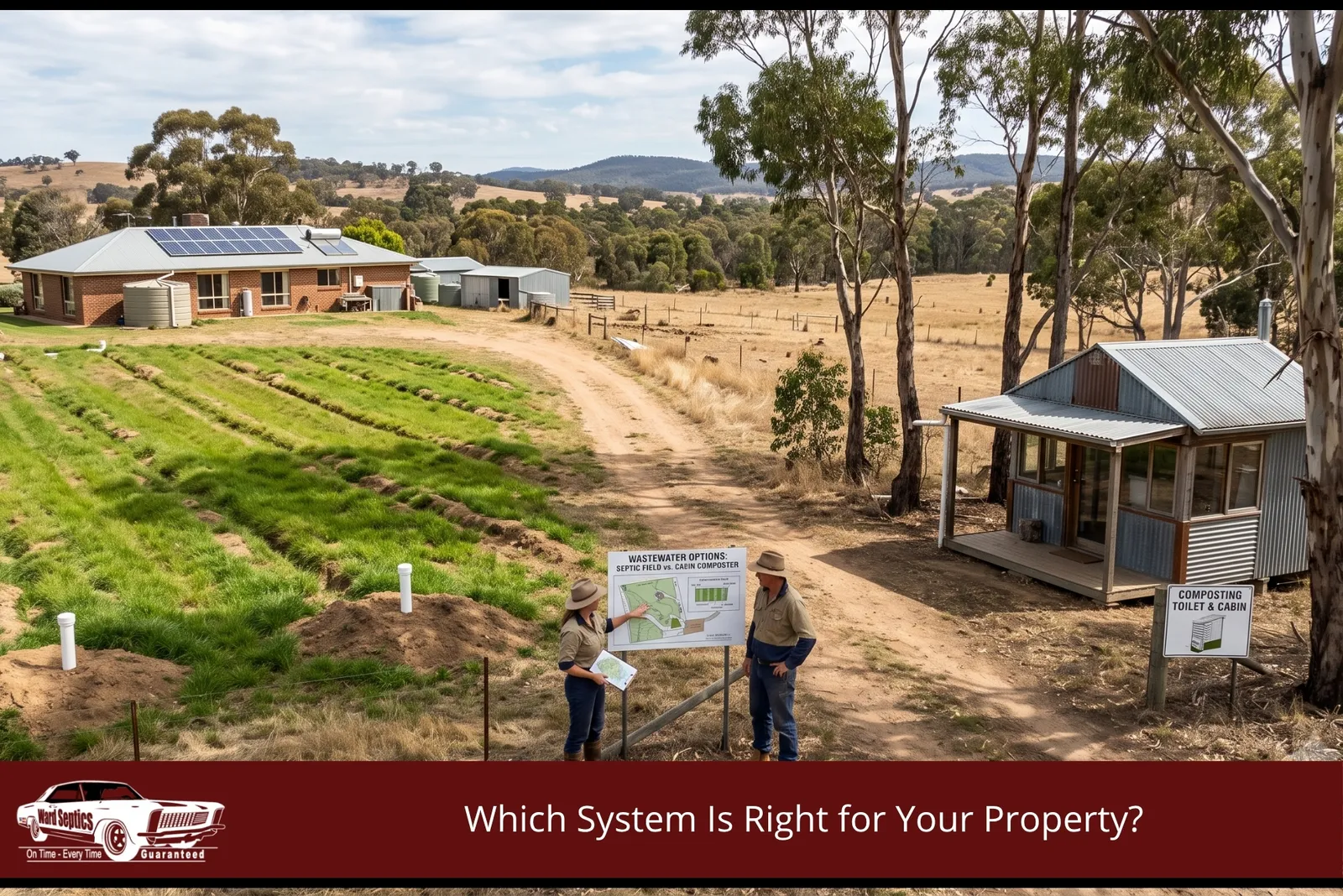
Neither system is universally better. The right choice depends on the specifics of your property and your priorities.
A septic tank tends to be the better fit for a permanent rural family home with reliable water access and enough land to support a properly designed drainage field. It handles higher household wastewater volumes comfortably, requires less day-to-day attention, and is a familiar, well-understood option for buyers if you ever sell the property. It is also generally the simpler path if your household already has standard plumbing fixtures throughout and you want every wastewater source managed through a single integrated system.
A composting toilet tends to be the better fit for off-grid cabins, tiny homes, properties with very limited or difficult land for a drainage field, and any situation where water conservation is a high priority. It is also worth considering as a secondary or supplementary system on a property that already has a septic tank, for example in a separate granny flat or studio, where adding a full septic connection would be costly or impractical.
Many rural properties end up using elements of both approaches, particularly where an existing septic system is already in place and well established. If you currently rely on a septic tank system and are weighing up whether a composting toilet makes sense for an additional dwelling or outbuilding on your property, it is worth getting independent advice on how the two systems would interact, particularly regarding greywater management.
| A PRACTICAL NOTE | If you choose a composting toilet, you will still need a plan for your greywater. Many properties pair a composting toilet with a simple greywater diversion system for garden irrigation, which keeps the overall setup low-cost and low water while still managing all the household's wastewater responsibly. |
|---|
Regulations and Approval
Both septic tanks and composting toilets require council approval in Australia before installation, though the specific requirements differ between local government areas and states. Septic systems are well established within most council frameworks, with clear standards for tank capacity, drainage field design, and setback distances from buildings, boundaries, and water sources. Composting toilets are increasingly accepted for permanent use, but the rules vary more by location, with some councils approving them readily for full-time residential use and others restricting them to seasonal or supplementary use alongside another approved system.
Before purchasing either system, it is worth confirming with your local council exactly what is required for your specific property and intended use. This is particularly important if you are building new, since site and soil evaluations are often required to determine which systems are even viable on your land before you can lodge an application.
| FINAL THOUGHT | A septic tank and a composting toilet are not competing technologies so much as different tools suited to different situations. A reliable water supply, a permanent residence, and adequate land point toward a septic system. Water scarcity, off-grid living, or a small or difficult block point toward a composting toilet. Understanding what each system does, rather than relying on assumptions, is the key to making the right call for your property. |
|---|
| NOT SURE WHICH SYSTEM SUITS YOUR PROPERTY? Ward Septics has decades of hands-on experience with septic systems across the Central Coast. If you are weighing up your wastewater options for a new build, renovation, or off-grid property, give us a call for honest, practical advice. Call Paul on 0438 315 514 or visit septiccleaning.com.au/contact-us |
|---|