
If your septic alarm goes off, act quickly and follow clear steps. First, silence the buzzer so you can focus, then reduce water use immediately. Postpone laundry, dishwashing, and long showers to lower the flow into the tank.
Check whether the pump has power. A tripped circuit breaker is a common cause, and resetting it may restore normal function. After this, inspect the area around the tank and drainfield. Pooling water, soggy ground, or strong odours indicate the system is not dispersing wastewater properly.
Even if the alarm resets after cutting back on water or restoring power, do not assume the problem is solved. Arrange an inspection with a licensed technician to confirm the cause. A professional can determine if it is a minor issue or if mechanical repairs are required.
Responding promptly protects the system, reduces health risks, and prevents costly damage to the property.
Why Septic Systems Have Alarms
Septic systems have alarms because they rely on pumps and sensors to move wastewater through the tank and into the drainfield. The alarm usually activates when the water level in the tank rises too high. This can occur if the pump stops working, if the drainfield is saturated, or if too much water enters the system in a short time.
The mechanism is straightforward. A float inside the tank rises with the water. Once it reaches a set point, it signals the alarm box, which activates a buzzer, a light, or both. This alerts you before wastewater backs up into the home.

Not every alarm means there is a major fault. Events such as heavy rain, a household with extra guests, or a short power outage can trigger it temporarily. More serious causes include a clogged pipe, a failing pump, or a blocked filter. The alarm provides an early warning so action can be taken before damage occurs.
What to Do Immediately When the Alarm Sounds
When a septic alarm activates, treat it as an early warning and act quickly. Start by silencing the buzzer so you can concentrate. The light will usually stay on until the problem is resolved. Reduce water use straight away by postponing laundry, avoiding dishwashing, and limiting showers. This eases the load on the tank.
Check if the system has power, particularly if it uses a pump. A tripped circuit breaker is a common cause of alarms. Resetting the breaker may restore normal operation if the issue is minor. Next, inspect the area around the tank and drainfield. Look for pooling water, soggy patches, or strong odours, which indicate the system is not dispersing wastewater effectively.
Even if the alarm resets after reducing water use or restoring power, arrange an inspection with a licensed technician. Professional assessment confirms whether the issue is temporary or if repairs are needed, preventing more serious problems from developing.
Common Problems Behind Septic Alarms
A septic alarm does not always mean there is a major failure, but it should not be ignored. Some alarms are temporary, while others point to mechanical faults that need repair. Common causes include:
- Extra water use from guests, heavy laundry, or back-to-back showers, which can temporarily raise the water level
- Heavy rainfall saturating the drainfield, reducing its ability to absorb wastewater
- A worn or failing pump struggling to move effluent through the system
- A blocked filter or clogged pipe restricting normal flow
- Tree roots entering pipes and creating obstructions
- Faults in the alarm itself, such as a float switch that triggers false signals
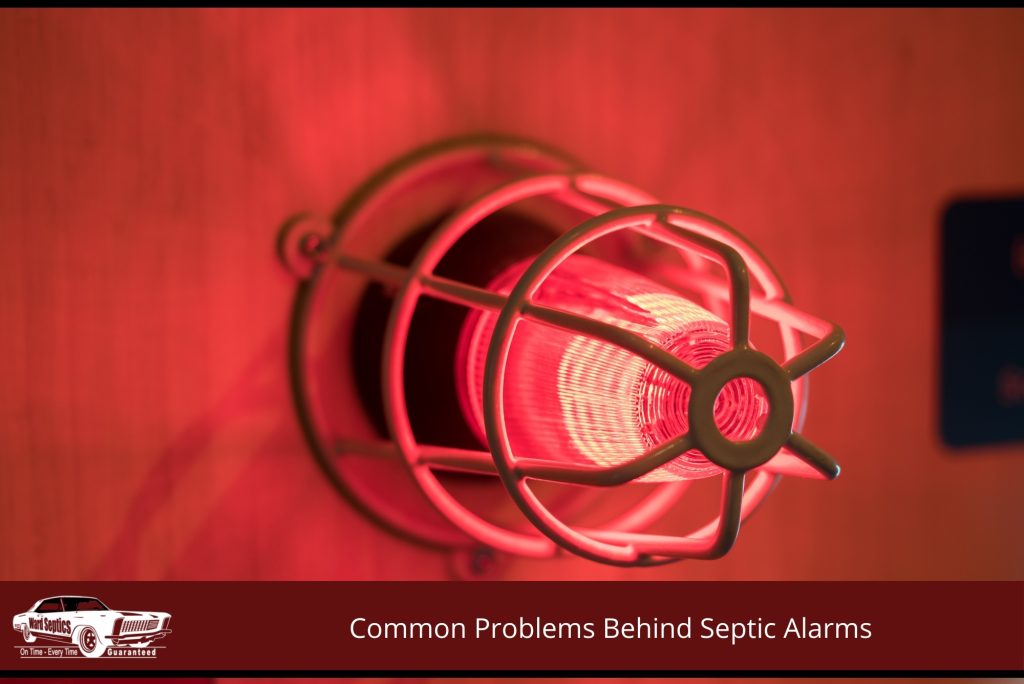
Because the reasons vary, it is not possible to know the exact cause without professional inspection. Even if the alarm resets, the underlying problem may still be developing. Booking an assessment ensures the system is properly checked and faults are corrected early.
Preventing Alarm Events in the Future
Septic alarms are useful, but preventing problems is better than dealing with emergencies. Regular care and smart habits reduce the chance of alarms going off and help extend the life of the system.
Practical steps include:
- Pumping the tank every three to five years to remove solids and prevent blockages
- Spreading out water-heavy activities like laundry or long showers instead of doing them all in one day
- Fixing leaks quickly, since a running toilet or dripping tap can add hundreds of litres of water each day
- Flushing only human waste and toilet paper, avoiding wipes, nappies, and sanitary products that can clog pipes
- Protecting the drainfield by keeping vehicles, heavy structures, and deep-rooted plants away from the area
- Scheduling annual inspections with a licensed professional to catch small issues before they become bigger problems
These practices reduce strain on the system, protect the drainfield, and limit the chances of alarms being triggered. Preventive care is the simplest way to avoid backups and costly repairs while keeping the septic system working reliably.
Why Professional Help is Essential
When a septic alarm goes off, most situations require professional attention. Pumps, electrical systems, and underground pipes are complex, and untrained repairs can cause further damage or create safety risks.
Licensed technicians can test each part of the system to identify the issue, whether it is a failed pump, a clogged pipe, a saturated drainfield, or an electrical fault. They also confirm whether the alarm unit itself is functioning correctly by checking the float switch and wiring.
In addition to fixing urgent problems, technicians carry out maintenance that reduces the risk of future alarms. This can involve servicing pumps, cleaning filters, and inspecting the drainfield for signs of early failure. Acting quickly when the alarm sounds and arranging professional inspection protects property, prevents health risks, and reduces the chance of expensive repairs.
If your alarm has gone off recently, contact septic cleaning for inspection. This ensures the issue is fully resolved and the system remains reliable.
Responding the Right Way
A septic alarm is an early warning that prevents more serious problems if addressed quickly. It alerts you before wastewater backs up or the drainfield is damaged. Taking the right steps reduces repair costs and protects your property.
Limit water use as soon as the alarm sounds. Postpone laundry, avoid running dishwashers, and keep showers short to reduce the load on the tank. Check if the pump has power by inspecting the circuit breaker, and look around the system for pooling water, soggy areas, or strong odours. These signs indicate the system is struggling to disperse wastewater.
Do not assume the problem is resolved if the alarm resets. A licensed technician should inspect the system to confirm whether the issue is minor or if repairs are needed. Regular pumping, annual inspections, and careful water use reduce the risk of future alarms.