If your NSW property has a septic system, regular inspection is not optional. It is a requirement under the Local Government Act 1993 and a condition of your Approval to Operate. Understanding what an inspection actually involves, who carries it out, and what happens when something needs attention gives you the best chance of staying compliant and avoiding the kind of problems that turn into expensive repairs.
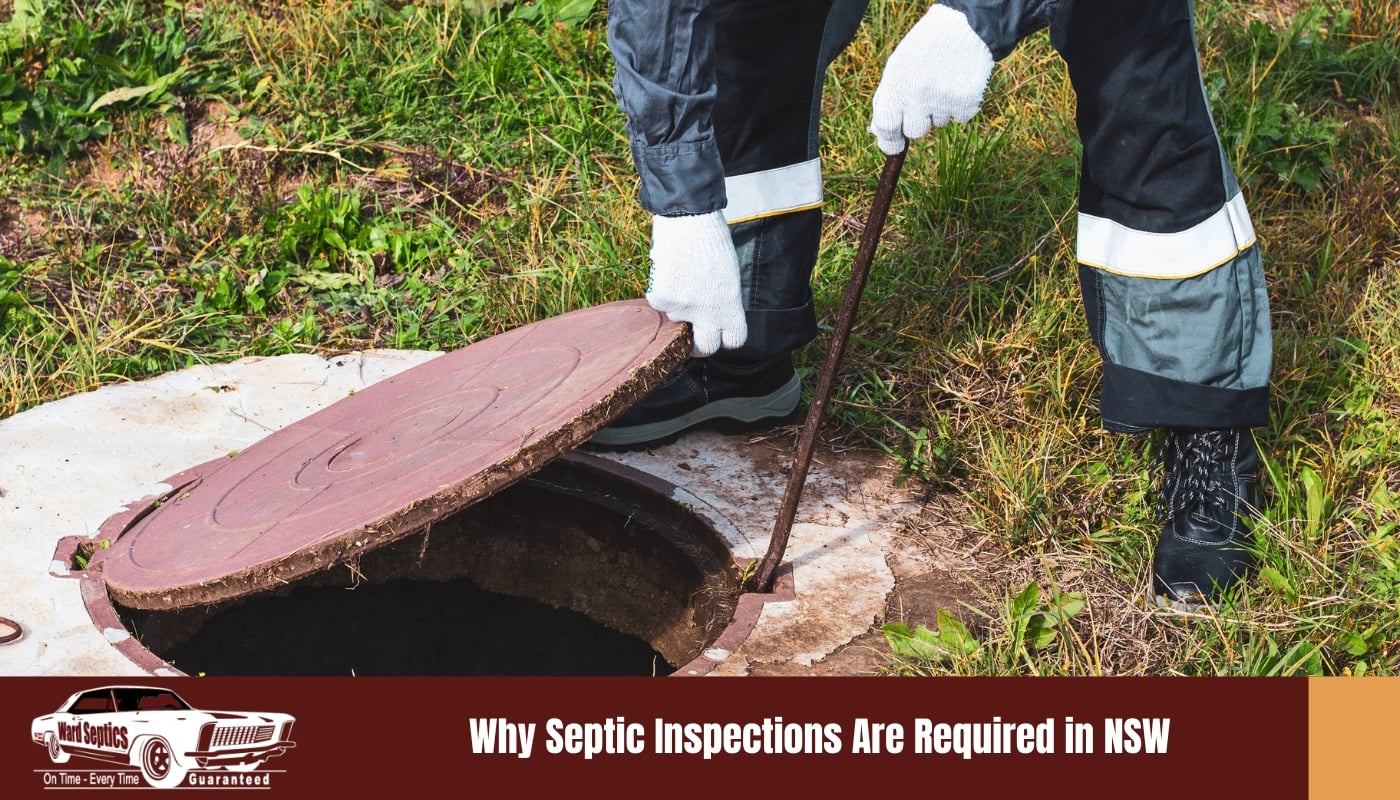
Why Septic Inspections Are Required in NSW
In New South Wales, all on-site sewage management systems, including conventional septic tanks and aerated wastewater treatment systems, must be registered with the local council and operate under an Approval to Operate issued under Section 68 of the Local Government Act 1993. This approval is not permanent. It must be maintained in good standing, and councils have a legal obligation to assess, classify, and monitor the systems within their area to protect public health and local waterways.
The NSW Office of Local Government’s SepticSafe program provides the framework most councils follow. When a new system is registered, or when an existing system is assessed, the council assigns it a risk classification, either high, medium, or low, based on where the system is located and how well it is functioning. That classification determines how frequently the council expects to inspect or receive maintenance reports on the system, and it forms the basis of what ongoing compliance looks like for your property.
Beyond the regulatory obligation, there is a straightforward practical reason to have a septic system inspected regularly. Problems that are caught early, such as a slow-filling drain field, a cracked tank wall, or a failing outlet baffle, are manageable and comparatively inexpensive to address. Problems that are left until they become visible at the surface, through odours, sewage backups, or boggy patches in the yard, are typically far more costly to fix and can attract compliance notices from the council as well.
NSW LEGAL REQUIREMENT
Under Section 68 of the Local Government Act 1993, operating an on-site sewage management system in NSW without a valid Approval to Operate is an offence. Councils are required to inspect systems and assign a risk classification as part of managing their Approval to Operate register. Significant penalties apply for non-compliance or for pollution incidents caused by a poorly maintained system.
Who Conducts Septic Inspections in NSW
There are two distinct types of septic inspection in NSW, and they are carried out by different people for different purposes.
Council Environmental Health Officer Inspections
Your local council is responsible for conducting formal inspections of registered on-site sewage management systems as part of the SepticSafe program. These inspections are carried out by council environmental health officers or environmental health inspectors, and their purpose is to assess whether your system is operating correctly, whether it continues to meet the conditions of its Approval to Operate, and what risk classification it should carry going forward. A council inspection typically results in a written report and, where applicable, a direction to carry out maintenance or remediation work within a specified timeframe.
Professional Septic Service Technician Inspections
Separate from council inspections, property owners also engage licensed septic service professionals for routine maintenance visits that include an inspection of the system’s condition. These visits, typically combined with a pump-out, allow a trained technician to identify wear and developing problems at the working level, inside the tank and around the drainage field, that may not be visible from the surface. For aerated wastewater treatment systems (AWTS), which are more mechanically complex than conventional septic tanks, NSW Health accreditation standards require quarterly servicing by a licensed contractor, and those service visits include a formal inspection component.
Pre-Sale Property Inspections
When a property with an on-site sewage management system is sold in NSW, it is common for a specific inspection to be carried out as part of the conveyancing process to confirm the system is in working order and compliant with council requirements. Some councils require a compliance certificate as a condition of sale, and buyers are increasingly requesting independent septic inspections before exchanging contracts. These inspections are typically conducted by a licensed plumber or accredited septic technician and produce a written assessment of the system’s condition and compliance status.
FOR PROPERTY SELLERS
If you are selling a rural or semi-rural NSW property with a septic system, having the system inspected and serviced before listing is strongly advisable. A system that is clearly in good order and recently pumped out removes a significant potential negotiating point for buyers and reduces the risk of the sale being delayed while compliance issues are resolved.
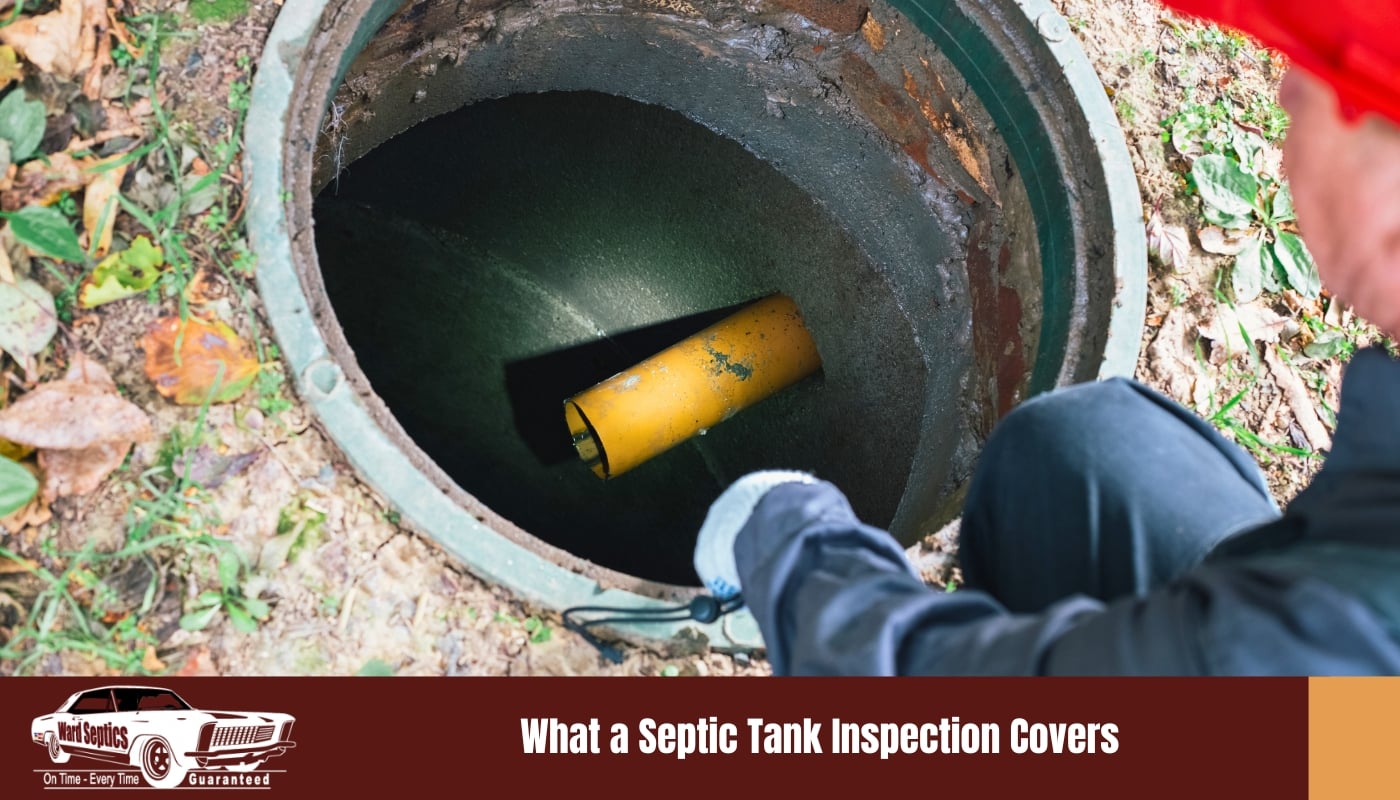
What a Septic Tank Inspection Covers
While the precise scope of an inspection will vary depending on whether it is a council compliance visit, a routine service inspection, or a pre-sale assessment, the core elements that a competent inspection addresses are consistent across all three. Here is what a thorough septic tank inspection in NSW covers.
Access and Tank Condition
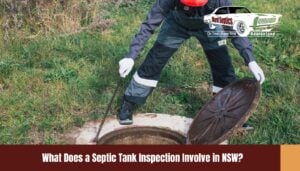
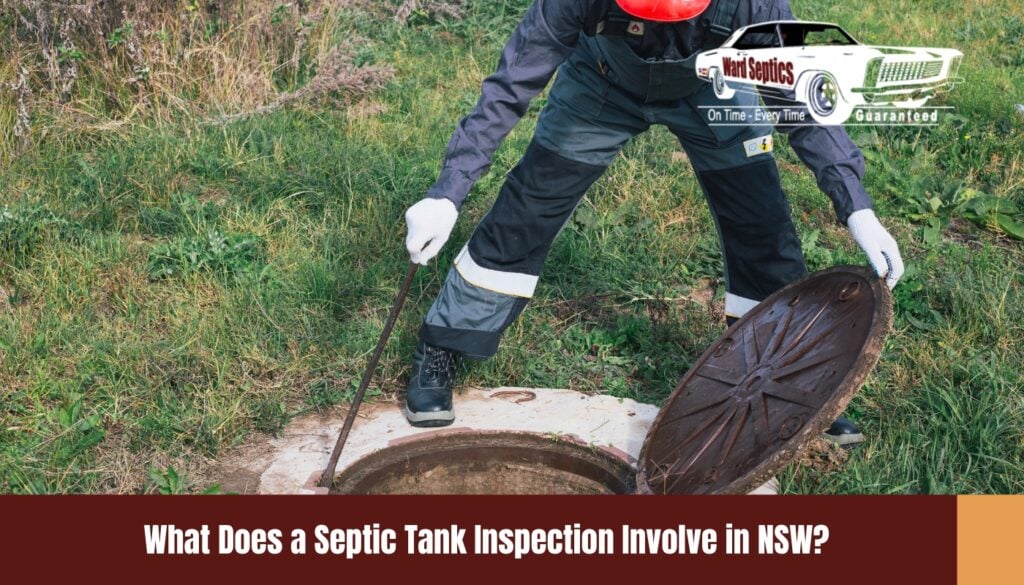
The first step is physically accessing the tank through its inspection openings or risers. The inspector or technician checks that the access lids are intact, that risers are at or near ground level to allow safe future access, and that the tank structure itself is sound. Cracked or corroded tank walls, damaged lids, or submerged access openings are all noted because they affect the tank’s ability to contain effluent and allow safe inspection and pump-out access. Older concrete tanks are particularly worth checking for cracking and root intrusion, while polyethylene tanks are inspected for deformation or damage to fittings.
Sludge and Scum Levels
Inside the tank, the inspector measures the depth of accumulated sludge on the bottom and the thickness of the scum layer floating at the top. These measurements determine whether the tank needs pumping. As a general guide, when the combined sludge and scum layers occupy more than about one third of the tank’s effective volume, the tank needs to be pumped to restore working capacity. A tank that is not pumped regularly enough will begin passing partially treated effluent into the drainage field, which accelerates the deterioration of that field and can eventually cause system-wide failure.
Inlet and Outlet Baffles
Baffles are components that sit at the tank’s inlet and outlet pipes. The inlet baffle directs incoming wastewater downward into the liquid layer rather than disturbing the scum on top, and the outlet baffle prevents floating scum from passing through to the drainage field. A failed or missing outlet baffle is one of the most common causes of drain field deterioration and can render a system non-compliant quickly. The inspector checks that both baffles are present, intact, and correctly positioned, and notes whether they are constructed from a durable material appropriate for the wastewater environment.
Effluent Quality and Tank Function
A properly functioning septic tank produces a clear or very lightly cloudy effluent in its outlet zone, with settled sludge below and floating scum above. If the effluent visible in the outlet zone is dark, murky, or odorous beyond what would be expected, this indicates that the bacterial treatment process is compromised, often because of overloading, chemical damage to the bacterial population, or insufficient retention time caused by a tank that has not been pumped. The inspector will note the apparent quality of the effluent and flag any indicators of poor treatment performance.
The Drainage Field or Absorption Trench
The drainage field is where the treated effluent from the tank is dispersed into the surrounding soil, and it is one of the most common failure points in an established system. The inspector walks the drainage area looking for surface ponding or breakout, which indicates that the field is saturated and effluent is reaching the surface. They also note whether the area has appropriate vegetation cover, since healthy grass over a drainage field is a sign that the system is functioning as intended, while bare patches, very lush growth concentrated along trench lines, or a persistent sewage odour at ground level are all warning signs. Subsidence or deformation of the ground above the trench lines may also indicate structural issues with the trench itself.
Setback Distances and Surrounding Environment
The inspector will take note of whether the system, including both the tank and the drainage field, is maintaining the required setback distances from buildings, property boundaries, driveways, stormwater drains, and any water sources such as dams, bores, or waterways. In NSW, these setback requirements are set by AS/NZS 1547:2012, the standard for on-site domestic wastewater management, with specific distances varying depending on the sensitivity of the surrounding environment. A system installed many years ago may have been adequate under older guidelines but may now need assessment against current standards, particularly if the surrounding land use has changed.
AWTS-Specific Components
For aerated wastewater treatment systems, the inspection scope is broader because these systems include mechanical and electrical components that are not present in a conventional septic tank. The quarterly service inspection required for AWTS in NSW includes checking the blower or air pump, the disinfection system, spray heads or drip irrigation components, the control panel and alarm systems, and the quality of the treated effluent being discharged. AWTS service inspections must be carried out by a contractor accredited under the NSW Health framework, and a service report must be provided to the property owner and in some cases to the council as part of the ongoing compliance record.
KEY POINT
A pump-out is not an inspection, and an inspection does not always include a pump-out. They are related but distinct activities. A pump-out removes accumulated sludge and restores the tank’s working volume. An inspection assesses the condition and performance of the entire system. Ideally both are done together, because with the tank emptied the inspector can see the tank walls, baffles, and floor clearly for a more thorough assessment.
NSW Risk Classifications and What They Mean
Under the SepticSafe framework, every registered on-site sewage management system in NSW is assessed and assigned a risk classification by the local council. This classification reflects the potential for the system to cause harm to public health or the environment based on its location, condition, and maintenance history. The classification directly determines how often the council expects to inspect or receive reports on your system.
The three-tier classification used by most NSW councils is summarised in the table below.
| Risk Class | Typical Situation | Inspection Frequency | What It Means for You |
| High | System near a watercourse, bore, or with a history of non-compliance or failure | More frequent; often annually or as directed by council | Council may require documented service reports and prompt rectification of any issues found |
| Medium | Functioning system in a standard rural or semi-rural setting without known issues | Periodic; typically every 3 to 5 years | Regular pump-outs and maintenance records help demonstrate ongoing compliance |
| Low | Well-maintained, compliant system well clear of environmental sensitivities | Less frequent; council may rely on self-reporting | Still required to maintain the system and notify council of significant changes |
Systems located near sensitive environments, such as waterways, groundwater-dependent ecosystems, drinking water catchments, or oyster leases, are more likely to receive a high-risk classification regardless of the system’s current condition. The sensitivity of the surrounding environment is a factor the council considers alongside the system’s operational status when assigning and reviewing classifications.
Your system’s risk classification can change over time. A system that receives consistent maintenance, has a clean inspection record, and is located in a lower-sensitivity area may be reclassified downward as evidence of reliable performance accumulates. Conversely, a system that generates complaints, fails an inspection, or is located near a newly identified sensitive feature may be reclassified upward.
PRACTICAL TIP
Keeping a folder with your pump-out receipts, service reports, and any council correspondence about your septic system is the most straightforward way to demonstrate maintenance history if your system is inspected or if you sell the property. A clear, documented record of consistent maintenance is one of the strongest signals that a system is well managed and does not require intensive oversight.
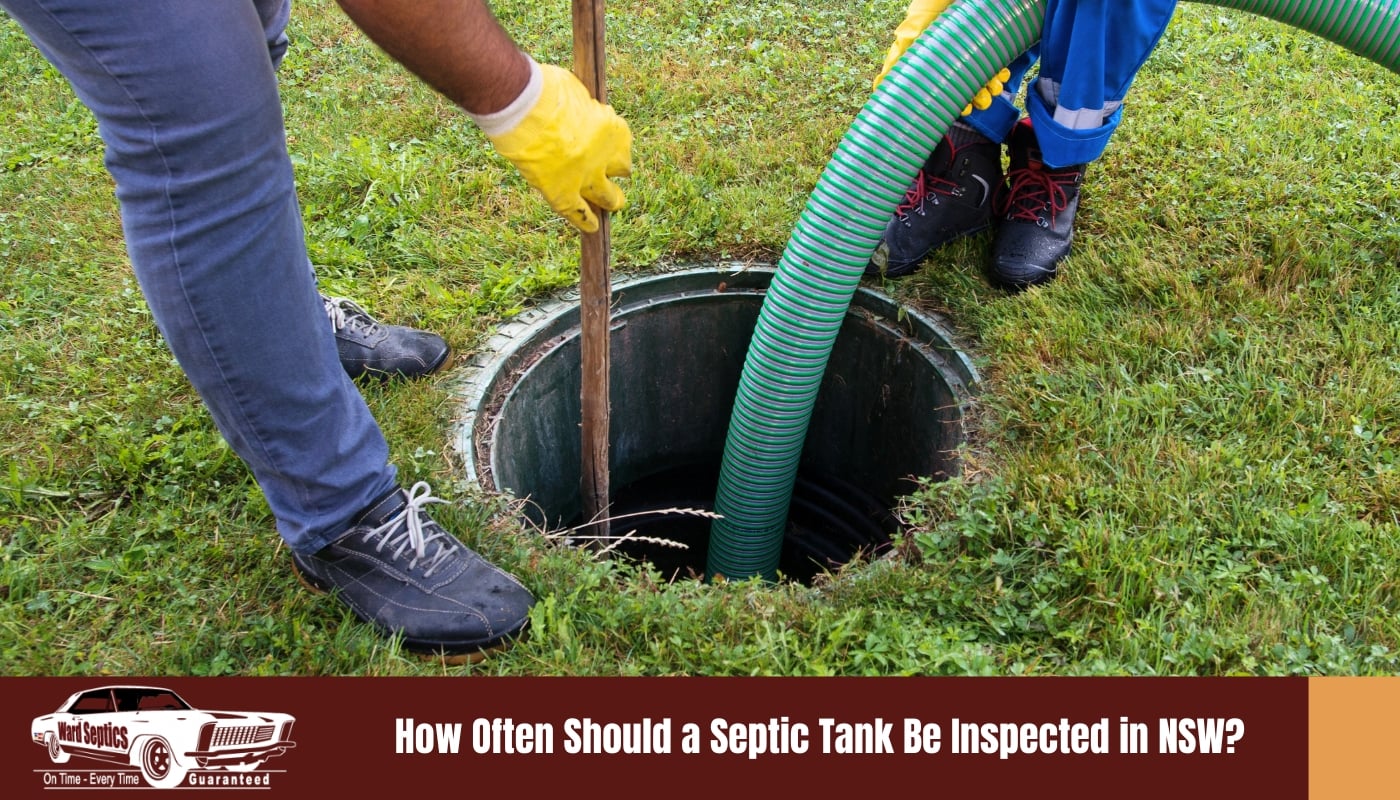
How Often Should a Septic Tank Be Inspected in NSW?
The answer depends on a combination of your risk classification and the type of system you have.
For conventional septic tanks with a medium or low risk classification, a professional pump-out and inspection every three to five years is the general baseline, though the specific requirement varies by council area. Some councils set their own inspection schedules within the SepticSafe program and will notify you when an inspection is due. Others rely more heavily on self-reported maintenance, with inspection triggered by changes in the system’s status, a complaint, or a property sale.
For aerated wastewater treatment systems, the NSW Health accreditation framework requires quarterly servicing as a non-negotiable condition of operating approval. This is because AWTS units include mechanical and disinfection components that require more frequent monitoring to maintain the effluent quality standards they are designed to meet. Failing to have an AWTS serviced quarterly can put the system out of compliance with its operating approval, which carries practical and legal consequences.
High-risk systems may be inspected by the council more frequently, sometimes annually, and may be required to provide service reports at defined intervals even between formal council visits. If your system is classified as high risk, your council should have communicated specific requirements to you as part of the approval process.
If you are unsure when your system was last pumped out, or if you have moved into a property and do not know the maintenance history of its septic system, our septic tank pump-out and inspection service is a straightforward starting point. We can assess the current condition of the system and give you a clear picture of what maintenance it needs and when.
What Happens If the Inspection Finds a Problem?
The outcome of an inspection that identifies a problem depends on the severity of what is found and who is conducting the inspection.
Issues Found During a Professional Service Visit
If a service technician finds that the tank needs pumping, that baffles are damaged, or that the drainage field is showing early signs of overloading, the most common outcome is a straightforward recommendation to carry out the relevant work, either on the same visit where possible or scheduled for a follow-up. Most problems identified during routine professional maintenance are at an early enough stage to be resolved without structural repair or system replacement. This is one of the clearest arguments for regular servicing rather than waiting for visible symptoms.
Issues Found During a Council Inspection
If a council environmental health officer identifies a compliance issue during a formal inspection, the typical response is a written notice requiring rectification within a specified timeframe. The notice will describe what needs to be corrected and set a date by which the work must be completed and verified. For minor issues such as a missing baffle or an overdue pump-out, the timeframe is usually reasonable and the work is straightforward. For more significant problems such as effluent breakout at the surface, a failing drainage field, or a structurally compromised tank, the council may require a more comprehensive remediation plan and may impose conditions on the system’s continued operation in the interim.
System Failure or Environmental Pollution
If a septic system fails to the point where untreated or poorly treated effluent is reaching a watercourse, groundwater, or the surface in an uncontrolled way, the matter becomes more serious under NSW environmental law. The NSW EPA has enforcement powers in relation to pollution incidents, and local councils also have authority to issue orders requiring immediate remediation. Fines for water pollution offences in NSW can be substantial, and in serious cases the property owner may be required to take the system out of use until a compliant replacement is installed. This is the outcome that regular inspection and maintenance is specifically designed to prevent.
WHAT TO DO FIRST
If you have received a council compliance notice about your septic system, or if you have noticed warning signs such as surface odour, slow drains, or wet patches near the drainage field, the most important step is to have a qualified professional assess the system as soon as possible. Acting early almost always results in a less disruptive and less expensive outcome than waiting for the problem to worsen.
Keeping Your Septic System Inspection-Ready
The simplest way to pass a septic inspection and maintain a low-risk classification in NSW is to treat your system’s maintenance as a routine, scheduled activity rather than something that only gets attention when something goes wrong. The following practices make the biggest practical difference.
- Have the tank pumped out on a regular schedule, typically every three to five years for a standard household, or more frequently if your household is larger or your water use is higher than average.
- Keep the access lids or risers accessible at ground level so that inspection and pump-out can be carried out safely and without excavation.
- Avoid flushing anything other than toilet paper and human waste down the toilet, and keep cooking fats, chemical cleaners, and strong disinfectants out of the system to protect the bacterial treatment process.
- Keep a record of every pump-out, service visit, and council inspection, including dates and any reports or receipts received.
- Check the area around the drainage field periodically for signs of surface breakout, unusual odour, or very concentrated lush growth along trench lines.
- Notify the council if you make any significant changes to the property that affect the system, such as adding a dwelling, increasing occupancy, or altering the drainage around the absorption area.
- For AWTS units, ensure quarterly servicing is never overdue, and keep all service reports on file as evidence of compliance.
FINAL THOUGHT
A septic inspection is not something to approach with dread. A well-maintained system will pass a council inspection comfortably, and the inspection itself is a valuable independent confirmation that the system is doing what it is supposed to do. The property owners who benefit most from regular inspections are those who have caught small problems before they became large ones, protecting both their property and their budget.
Due for an Inspection or Pump-Out?
Ward Septics services properties across the NSW Central Coast and surrounding areas. Whether you need a routine pump-out, a pre-sale inspection, or advice on keeping your system compliant, give Paul a call for straightforward, experienced help.
Book a service at septiccleaning.com.au/contact-us